
Why Your North Texas Home Grounding Might Be Failing (and How to Tell)
Your home’s electrical grounding system protects you from shocks and electrical fires. In North Texas the shifting clay soil and extreme weather can cause grounding failures that put your family at risk. This guide shows you how to spot the warning signs and what to do next. Texas soil conditions.
Common Signs Your Home’s Grounding System Is Failing
You might notice several warning signs if your grounding system fails. Here are the most common symptoms.
- Frequent minor shocks when touching appliances or metal fixtures
- Flickering or dimming lights when large appliances start up
- Buzzing or humming sounds from outlets or switches
- Discolored or warm outlets and switches
- Tripped circuit breakers that reset repeatedly
- Electronics that fail or burn out quickly
These symptoms mean electricity cannot flow safely to ground. Instead it may travel through unintended paths like your body or home wiring.. Read more about Specialized Electrical Wiring Tips for Home Recording Studios in Oak Cliff.
How Dallas’s Expansive Clay Soil Affects Grounding
The Blackland Prairie clay that covers much of Dallas and surrounding suburbs like Duncanville and Balch Springs creates unique grounding challenges. This soil expands when wet and contracts when dry. This constant movement can cause grounding rods to lose contact with the earth over time. Electricians Balch Springs.
During North Texas summers the ground dries and cracks. Grounding rods that worked fine in spring may sit in air pockets by August. When heavy rains return the soil swells and can actually push rods upward breaking the electrical connection. Who to Call for Emergency Electrical Repair in Uptown Dallas Tonight.
Winter freezes also stress grounding systems. Water in the soil turns to ice expanding and potentially cracking or dislodging ground rods and connections.
Why Dallas Homes Face Higher Grounding Failure Rates
Several factors make North Texas homes more vulnerable to grounding problems than homes in other regions.
Older homes in neighborhoods like Carrollton and DeSoto often have original grounding systems from the 1960s and 1970s. These systems may use smaller ground rods or lack proper bonding to water pipes as required by current National Electrical Code standards. National Electrical Code requirements.
Many Dallas homes have copper water pipes that were once used for grounding. When these pipes are replaced with plastic the grounding path is lost unless a new ground rod system is installed.
Construction in areas with high water tables like parts of Grand Prairie can lead to corrosion of grounding connections. Salt and minerals in the soil accelerate this process.
Understanding Your Home’s Grounding System
Your home’s grounding system includes several key components that work together to safely direct electrical faults to earth. Electrical Contractor.
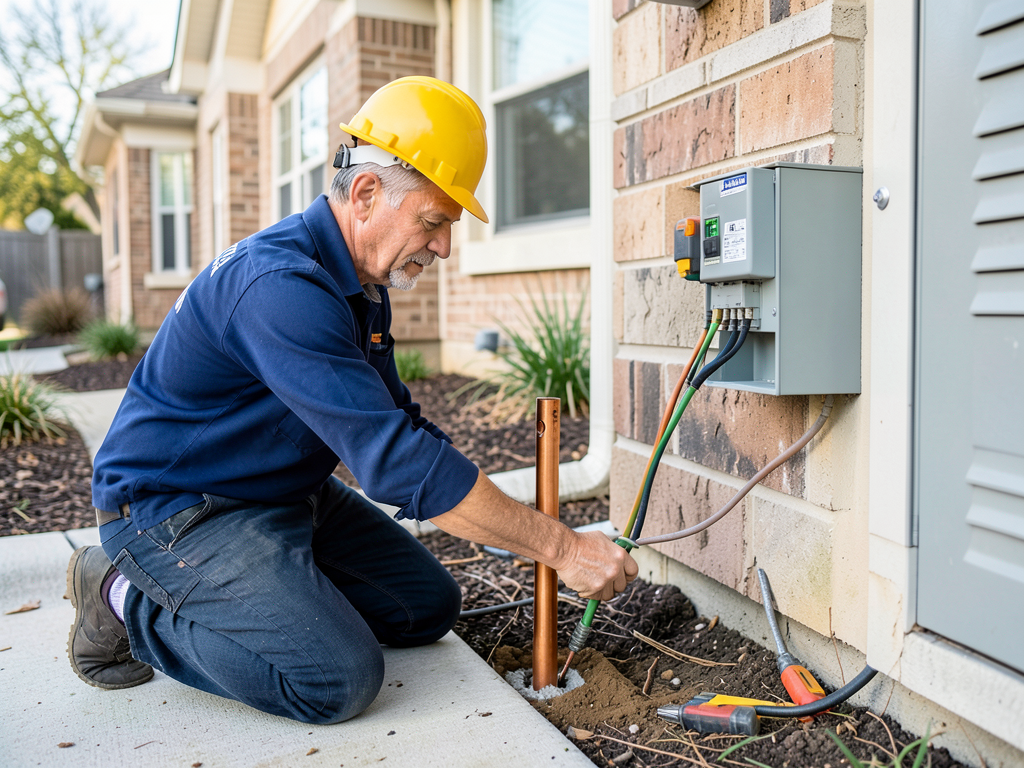
The main grounding electrode connects to a copper rod driven into the earth near your electrical service panel. This rod must be at least eight feet long and properly bonded to your home’s electrical system.. Read more about Managing Two Electric Vehicles with a Dual Charging Station in Your McKinney Home.
A grounding electrode conductor runs from the rod to your main service panel. This heavy copper wire creates the path for electricity to follow during a fault.
The main bonding jumper connects your grounding system to the neutral bus in your service panel. This ensures that if a hot wire touches a metal part of your home the electricity flows to ground instead of energizing those surfaces.
Grounding vs Bonding: What’s the Difference
Grounding and bonding serve different but related purposes in your electrical system.
| Grounding | Bonding |
|---|---|
| Connects electrical system to earth | Connects metal parts together |
| Provides path for lightning and surges | Ensures all metal stays at same voltage |
| Uses ground rods and water pipe connections | Uses bonding jumpers and straps |
| Protects against external surges | Protects against touch voltage |
Both systems must work together for complete electrical safety. A failure in either system can leave your home vulnerable to shocks or fires.
Common Grounding Code Violations in Dallas Homes
Many older Dallas homes violate current National Electrical Code requirements for grounding. Here are the most frequent issues found during inspections.
| Violation | Risk Level | Common In |
|---|---|---|
| No ground rod or undersized rod | High | Homes built before 1970 |
| Missing main bonding jumper | High | DIY electrical work |
| Corroded ground connections | Medium | Coastal soil areas |
| Using gas pipes for grounding | High | Older suburban homes |
| Missing GFCI protection in wet areas | Medium | Bathrooms and kitchens |
These violations often go unnoticed for years until a serious problem occurs. A professional inspection can identify and correct these safety hazards.
How to Test Your Home’s Grounding System
Testing electrical grounding requires specialized equipment and knowledge. Here are the basic steps a licensed electrician follows.
- Visual Inspection
Check ground rod connections for corrosion damage or loose wires. Look for proper bonding at the service panel.
- Continuity Testing
Use a multimeter to verify that grounding conductors have low resistance to earth. Test from the service panel to the ground rod.
- Voltage Testing
Measure voltage between hot neutral and ground under load. Proper grounding shows minimal voltage difference.
- Resistance Testing
Measure earth resistance between the ground rod and a known good ground point. Should be below 25 ohms for most installations.
These tests reveal whether your grounding system meets current safety standards. Results outside normal ranges indicate problems that need professional repair.
Repairing a Failed Grounding System
Fixing grounding problems requires careful work to ensure safety and code compliance. Here are the main repair steps.
First the electrician removes any damaged or corroded connections. Old ground rods that have lost contact with soil may need replacement with new eight-foot copper-clad rods.
New grounding electrode conductors are installed using proper clamps and connectors. These must be sized according to National Electrical Code requirements for your home’s electrical service.
The main bonding jumper is installed or replaced to ensure proper connection between the grounding system and service panel neutral bus.
Additional grounding electrodes may be added if soil conditions make single-rod grounding insufficient. This is common in areas with high clay content or rocky soil.
When to Call a Professional Electrician
Grounding problems require professional attention for several reasons. First working inside electrical panels exposes you to lethal voltages. Second proper testing requires equipment most homeowners don’t own.
Third code violations must be corrected to meet National Electrical Code and local Dallas building requirements. A licensed electrician knows these requirements and can obtain necessary permits.
Finally improper grounding repairs can create more dangerous conditions than the original problem. For example creating a high-resistance ground path can cause equipment damage or fire.
If you notice any warning signs or your home is over twenty years old consider scheduling a grounding inspection. This is especially important before adding major electrical loads like EV chargers or whole-house generators.
Protecting Your Home from Future Grounding Issues
Several steps help prevent grounding problems from developing in your North Texas home.
Schedule regular electrical safety inspections every three to five years. This catches grounding degradation before it becomes dangerous.
Install whole-house surge protection devices. These protect your electronics and appliances from voltage spikes that can stress your grounding system.
Keep the area around your electrical service panel clear and dry. Moisture accelerates corrosion of grounding connections.
Consider upgrading older electrical panels that may lack proper grounding provisions. Modern panels include better grounding and bonding features.
Document any grounding repairs or upgrades. This helps future electricians understand your system’s condition and history. Electricians Duncanville.
Local Building Codes and Permitting
Dallas and surrounding suburbs require permits for most electrical work including grounding system repairs. The process ensures work meets National Electrical Code standards and local amendments.
In Dallas you must obtain an electrical permit before starting work. The permit requires submitting plans showing the proposed grounding system including rod locations and conductor routing.
Inspections verify that grounding meets code requirements for rod depth conductor sizing and bonding connections. Work must pass inspection before the utility company will reconnect power if it was disconnected.
Many insurance companies require proof of proper grounding for coverage. They may deny claims for electrical damage if grounding doesn’t meet code.
Cost Factors for Grounding Repairs
Grounding repair costs vary based on several factors. Simple repairs like replacing a ground rod might cost a few hundred dollars. Complete system upgrades for older homes can cost more.
Soil conditions affect cost. Rocky or clay soil makes driving new ground rods difficult and may require specialized equipment.
Accessibility impacts price. Grounding connections inside finished walls or underground require more labor to access and repair.
Permit fees and inspection costs add to the total. These vary by city but typically range from fifty to two hundred dollars.
Emergency repairs after electrical failures cost more due to after-hours labor rates and expedited service requirements.
Why Professional Installation Matters
Professional electricians bring expertise that DIY attempts cannot match. They understand local soil conditions and how they affect grounding effectiveness.
They know current code requirements and can ensure your system meets all safety standards. This protects your home and may be required for insurance or home sale purposes.
Professionals have proper testing equipment to verify that repairs actually solve the problem. They can also identify related issues that might cause future problems.
Most importantly licensed electricians carry insurance that protects you if something goes wrong during the repair process.
Frequently Asked Questions
How do I know if my home has proper grounding?
Warning signs include shocks from appliances flickering lights and discolored outlets. Only professional testing can confirm proper grounding. Homes built before 1970 often lack adequate grounding systems.
Can I install a ground rod myself?
Ground rod installation requires permits and must meet code requirements. Improper installation can create safety hazards. Professional installation ensures proper depth connections and bonding.
How often should grounding systems be inspected?
Schedule inspections every three to five years or when buying an older home. Also inspect if you notice warning signs or plan major electrical upgrades like EV chargers.
What happens if my home isn’t grounded?
Ungrounded homes risk electrical shocks equipment damage and fire. Fault currents have no safe path to earth and may travel through people or building materials instead.
Does homeowners insurance require proper grounding?
Many policies require code-compliant grounding. Some insurers may deny claims for electrical damage if grounding doesn’t meet current standards. Check your policy for specific requirements.
Take Action to Protect Your Home Today
Don’t wait for electrical problems to become dangerous. If you notice any warning signs or your home is over twenty years old schedule a professional grounding inspection.
Apex Electricians Dallas serves homeowners throughout the metroplex with expert grounding inspections and repairs. Our licensed electricians understand North Texas soil conditions and local code requirements.
Call us today at (972) 823-5855 to schedule your grounding inspection. We’ll test your system identify any problems and provide clear recommendations for keeping your home safe.
Your family’s safety is worth the call. Contact us now for peace of mind about your home’s electrical grounding system.
