
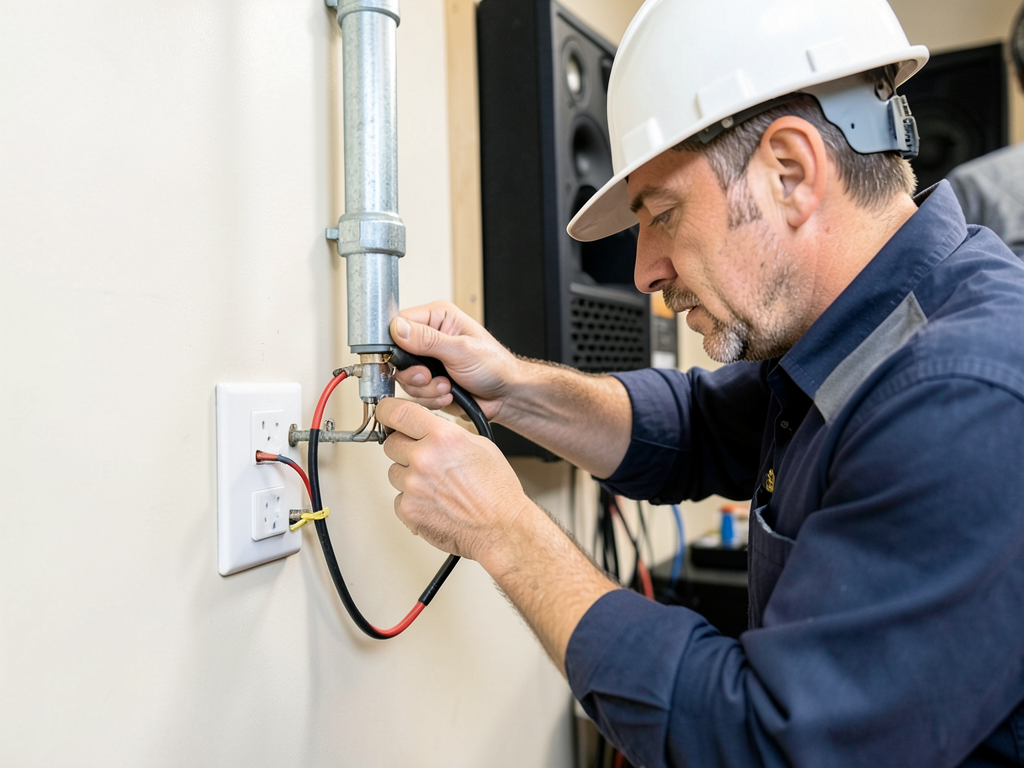
Specialized Electrical Wiring Tips for Home Recording Studios in Oak Cliff
Setting up a home recording studio in Oak Cliff requires more than just acoustic treatment and the right gear. The electrical foundation of your studio determines whether your recordings sound professional or plagued by hum and interference. North Texas homes built before the 1990s often have wiring that struggles with the clean, isolated power modern audio equipment demands. Texas Department of Licensing and Regulation.
Dallas-area musicians face unique challenges. The Oncor electric grid serves Oak Cliff with overhead lines vulnerable to summer thunderstorms. Older homes in neighborhoods like Kessler Park and Wynnewood often contain outdated wiring that cannot handle today’s recording equipment power demands. This guide walks through the specialized electrical requirements that separate amateur setups from professional-grade studios. Electrical Contractor.
Why Standard Home Wiring Fails Recording Studios
Standard residential circuits share power with refrigerators, HVAC systems, and lighting. Each device creates electrical noise that travels through your studio equipment. Tube amplifiers, audio interfaces, and digital converters pick up this interference as unwanted hum or static in your recordings.. Read more about Essential Electrical Requirements for a Commercial Grade Home Gym in Keller.
Ground loops cause another common problem. When multiple devices connect to different outlets on separate circuits, they create voltage differences. Audio cables pick up these differences as 60-cycle hum that ruins recordings. Oak Cliff’s older homes often lack proper grounding infrastructure, making this issue worse.
Electromagnetic interference from cell towers, radio stations, and even LED lighting creates additional noise. Dallas’s urban environment means your studio wiring must shield against radio frequencies that standard residential wiring ignores.
Dedicated 20-Amp Circuits for Clean Power
Audio equipment needs dedicated circuits isolated from household loads. A 20-amp circuit provides sufficient power for most studio setups while maintaining clean signal paths. Each major piece of equipment should have its own dedicated breaker.. Read more about Setting Up a Dedicated Home Server Room in Your Frisco Professional Office.
Calculate your total power needs before installation. A typical setup includes:
| Equipment | Amps Required | Typical Load |
|---|---|---|
| Audio Interface | 1-2 | 120-240 watts |
| Tube Guitar Amp | 3-5 | 300-500 watts |
| Studio Monitors | 2-3 | 200-300 watts |
| Computer Workstation | 3-4 | 300-400 watts |
| External Hard Drives | 1 | 100 watts |
| Phantom Power Supply | 1-2 | 100-200 watts |
Total these loads and add 20% for headroom. Most home studios require three to four dedicated 20-amp circuits minimum. Never daisy-chain power strips or share circuits between audio gear and household appliances.
Isolated Ground Receptacles and Star Grounding
Standard outlets ground through the metal box and building structure. This creates multiple ground paths that introduce noise. Isolated Ground (IG) receptacles solve this by providing a dedicated ground wire back to the main panel.
IG receptacles have an orange triangle marking and require special wiring. The ground wire runs separately from other circuits, eliminating ground loops. This setup costs more but prevents the 60-cycle hum that ruins vocal tracks and acoustic recordings.
Star grounding takes isolation further. All audio equipment connects to a central grounding point through dedicated ground wires. No device grounds through its power cord to the building structure. This method requires careful planning but eliminates ground loop problems completely.
Oak Cliff homes built before 1960 may lack proper grounding altogether. These require full grounding system upgrades before installing IG receptacles. The National Electrical Code requires all new installations to meet current grounding standards. National Electrical Code (NEC).
Shielding Against EMI and RFI Interference
Dallas’s urban environment bombards your studio with electromagnetic interference. Cell towers, radio stations, and Wi-Fi networks create radio frequencies that standard wiring cannot block. Shielded cable and proper conduit protect your audio signals.
Metal conduit provides the best protection. EMT (electrical metallic tubing) shields against both EMI and physical damage. Run all studio circuits in metal conduit when possible. If using Romex cable, wrap it in aluminum foil or use shielded variants.
Power conditioning devices filter remaining interference. Look for units with isolation transformers that separate your studio from building power. These devices also protect against voltage spikes from lightning strikes common during North Texas spring storms.
LED lighting creates high-frequency noise that interferes with sensitive audio equipment. Use magnetic ballasts for fluorescent lights or install separate lighting circuits away from audio gear. Consider low-voltage DC lighting systems that eliminate AC noise entirely.
Power Conditioning and Surge Protection
Surge protectors alone cannot protect studio equipment. Lightning strikes and utility grid fluctuations require whole-home surge protection at the main panel. This device clamps voltage spikes before they reach your studio circuits.
Install a dedicated sub-panel for your studio. This separates studio power from the main building load, reducing interference. The sub-panel should include its own surge protection and isolation transformer.
Power conditioners with voltage regulation maintain stable power during Dallas’s summer brownouts. These units keep voltage within 120V ±5% even when building power fluctuates. This stability prevents digital equipment from locking up or producing noise.
Battery backup systems (UPS) provide clean power during outages. Choose units with pure sine wave output to avoid introducing distortion. Most studio equipment needs only 5-10 minutes of backup to save work and shut down safely.
Dallas Building Code Compliance
Dallas building inspections require permits for all new circuits and panel upgrades. The City of Dallas follows the 2020 National Electrical Code with local amendments. Studio installations must meet these standards to pass inspection.
Permits cost $50-$200 depending on project scope. Inspections verify proper grounding, wire sizing, and circuit protection. Unpermitted work creates liability if you sell your home or experience electrical problems.
Oak Cliff’s older homes often need electrical system upgrades before studio installation. Federal Pacific panels manufactured before 1980 pose fire hazards and cannot support modern loads. Replace these with current breaker panels from Square D, Siemens, or Eaton.
Underground wiring in Oak Cliff’s expansive clay soil requires special consideration. The soil expands and contracts with moisture changes, potentially damaging buried conduit. Use Schedule 80 PVC or direct burial cable rated for wet locations.
Climate Considerations for North Texas Studios
Dallas summers push air conditioning systems to maximum capacity. These units create massive electrical noise when compressors cycle on and off. Studio circuits must isolate from HVAC loads to prevent this interference.
Spring thunderstorms bring lightning strikes that can destroy unprotected equipment. Whole-home surge protection and proper grounding become critical during storm season. Oak Cliff’s older trees increase lightning strike risk to nearby power lines.
High humidity affects electronic equipment. Studio spaces need proper ventilation to prevent moisture buildup. Consider dedicated HVAC systems with humidity control for critical recording spaces.
Winter freezes occasionally stress electrical heating systems. Ensure your studio has backup heating that doesn’t create electrical noise. Electric space heaters should connect to dedicated circuits away from audio equipment.
Professional Installation vs. DIY
Audio wiring requires both electrical expertise and understanding of signal integrity. Licensed electricians know code requirements but may not understand studio-specific needs. Audio engineers understand signal paths but cannot perform electrical work legally. Electricians Balch Springs.
Choose contractors with both credentials. Look for electricians who have worked on recording studios or commercial audio installations. Ask for references from local musicians or producers in the Dallas area. Reliable Commercial Electrical Contractors for Businesses in Downtown Dallas.
DIY installation violates electrical codes and insurance policies. Insurance companies deny claims for fire damage caused by unpermitted electrical work. Professional installation includes permits, inspections, and warranty protection.
Professional installation costs $2,000-$5,000 for a complete studio setup. This includes dedicated circuits, IG receptacles, sub-panel installation, and surge protection. The investment protects thousands in recording equipment and ensures professional sound quality.
Load Calculation and Circuit Planning
Proper load calculation prevents overloaded circuits and ensures reliable operation. Start with your equipment list and calculate total amperage draw. Add 125% for continuous loads (equipment running over three hours).
Sample calculation for a typical Oak Cliff home studio:
| Equipment Category | Amps | Circuits Needed |
|---|---|---|
| Recording Computer | 4 | 1 |
| 2 | 1 | |
| 3 | 1 | |
| 5 | 1 | |
| 2 | 1 | |
| 3 | 1 | |
| Total | 19 | 5 |
This setup requires five dedicated 20-amp circuits. Never exceed 80% of circuit capacity for continuous operation (16 amps on a 20-amp circuit).
Plan cable routes before installation. Keep audio cables away from power lines by at least 12 inches. Cross power and audio cables at 90-degree angles when necessary. Use cable trays or raceways to organize wiring.
Common Mistakes to Avoid
Most studio electrical problems stem from common mistakes. Avoid these errors to ensure clean, reliable power.
- Sharing circuits between audio and household loads
- Using standard outlets instead of IG receptacles
- Skipping surge protection and power conditioning
- Ignoring building codes and permit requirements
- Overloading existing circuits with new equipment
- Running audio cables parallel to power lines
- Neglecting proper grounding in older homes
Each mistake introduces noise or creates safety hazards. Professional installation prevents these issues from the start.
Testing and Verification
After installation, verify proper operation before connecting expensive equipment. Test each circuit for correct voltage, ground continuity, and absence of noise.
Use a multimeter to check voltage at each outlet. It should read 120V ±5% with no load. Test ground resistance with a ground impedance tester. Values under 5 ohms indicate proper grounding.
Check for neutral-ground voltage with a line splitter. Any reading above 2 volts indicates grounding problems. Test for EMI with a portable spectrum analyzer or AM radio. Strong radio signals near outlets suggest inadequate shielding.
Document your installation with photos and test results. This documentation helps troubleshoot future problems and proves compliance for insurance purposes.
Maintenance and Upgrades
Studio electrical systems need periodic maintenance. Check connections annually for tightness and corrosion. Replace surge protectors every 2-3 years as they wear out from small surges.
Monitor circuit breaker performance. Frequent tripping indicates overloaded circuits or failing breakers. Replace breakers that feel warm to the touch or trip without load.
Plan for future expansion. Leave space in your sub-panel for additional circuits. Use larger conduit than currently needed to accommodate future cable additions.
Stay current with code changes. The National Electrical Code updates every three years. New requirements may affect your studio installation over time.
Frequently Asked Questions
How much does studio electrical installation cost in Oak Cliff?
Professional studio electrical installation costs $2,000-$5,000 depending on your home’s existing wiring and the complexity of your setup. Older homes in Oak Cliff may require additional grounding system upgrades.
Do I need permits for studio electrical work in Dallas?
Yes. Dallas requires permits for all new circuits, panel upgrades, and sub-panel installations. Permits cost $50-$200 and include required inspections to ensure code compliance.
Can I use my existing outlets for studio equipment?
No. Standard outlets share circuits with household loads and lack proper grounding for audio equipment. Dedicated circuits with isolated ground receptacles prevent hum and interference.
How many circuits does a home studio need?
Most home studios require three to five dedicated 20-amp circuits. Calculate your total equipment load and add 20% for headroom. Never exceed 80% of circuit capacity for continuous operation.
What’s the difference between IG and standard outlets?
Isolated Ground (IG) receptacles provide a dedicated ground path separate from building structure. This eliminates ground loops that cause 60-cycle hum in audio recordings. Standard outlets ground through the metal box and building structure.
How do I protect against Dallas lightning strikes?
Install whole-home surge protection at your main panel and dedicated surge protectors for studio circuits. Proper grounding and shielded wiring provide additional protection against electromagnetic interference from lightning.
Should I upgrade my electrical panel for a studio?
If your panel is older than 20 years or has Federal Pacific breakers, upgrade before studio installation. Modern equipment requires reliable, properly sized breakers and adequate space for new circuits.
How long does studio electrical installation take?
Professional installation typically takes 2-3 days including permits, wiring, and inspections. Additional time may be needed for panel upgrades or grounding system improvements in older homes.
Protect Your Investment with Professional Studio Wiring
Your recording equipment represents a significant investment. Professional electrical installation protects that investment while ensuring professional sound quality. Don’t let electrical problems ruin your recordings or create safety hazards.
Apex Electricians Dallas specializes in studio electrical installations throughout Oak Cliff and the greater Dallas area. Our licensed electricians understand both code requirements and audio-specific needs. We provide complete installations including permits, inspections, and warranty protection. Electricians Duncanville.
Ready to upgrade your studio’s electrical system? Call Apex Electricians Dallas today at (972) 823-5855 for a free consultation. We’ll evaluate your current setup, recommend improvements, and provide a detailed quote for professional installation.
Don’t let electrical problems hold back your music. Contact us today to schedule your studio electrical evaluation. Your recordings deserve clean, reliable power.
Learn more about our emergency electrical services in Uptown Dallas
See our ceiling fan installation services in Lake Highlands
Find reliable electricians for your Plano kitchen remodel
