
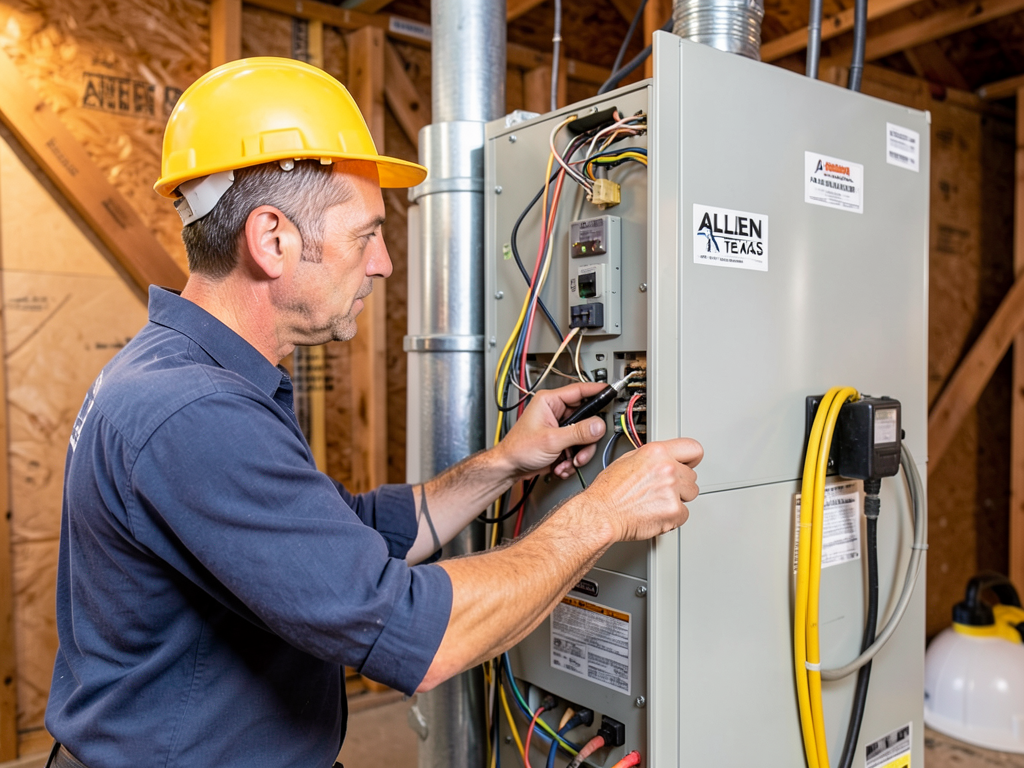
Why Your Allen Smart Thermostat Installation Might Require a New C-Wire
Installing a smart thermostat in your Allen home should be simple. But when the screen stays blank or the device won’t power on, you might be missing something crucial. The culprit is often the C-wire, or common wire, which many older Texas homes simply don’t have.
Smart thermostats like Nest, Ecobee, and Honeywell need constant power to run Wi-Fi, touchscreens, and learning algorithms. Without a C-wire, they try to steal power through the other wires, causing erratic behavior or complete failure. In Allen’s mix of mid-century ranches and newer builds, this wiring gap is surprisingly common.
Before you return that smart thermostat or call for help, understand why your Allen home might need a C-wire upgrade and what your options are.
What Is a C-Wire and Why Does Your Smart Thermostat Need One?
The C-wire is the common wire that completes the 24V AC circuit in your HVAC system. Think of it as the return path that lets electricity flow continuously to your thermostat. Without it, your smart device can’t maintain its features.
Here’s how the wiring works in a typical HVAC setup:
- R-wire: Provides 24V power from the transformer
- W-wire: Controls the heating system
- Y-wire: Controls the cooling system
- G-wire: Controls the fan
- C-wire: Returns power to complete the circuit
Allen homes built before 2000 often have only four wires. The C-wire was considered optional when simple mechanical thermostats ruled the market. But modern smart thermostats draw more power than older models, making the C-wire essential.
How to Identify if Your Dallas Home Has a Common Wire
Finding out if you have a C-wire starts with removing your existing thermostat faceplate. Look for a wire connected to the C terminal on the back plate. If you see a blue wire there, you’re in luck. Finding a Reliable Residential Electrician in Plano for Your Kitchen Remodel.
No blue wire? That doesn’t always mean you’re out of luck. Some installers use different colors or repurpose existing wires. The only way to know for sure is to check your furnace control board.
Safety first: Turn off power at the breaker before inspecting any wiring. The control board lives inside your furnace or air handler, often in an attic space common in Allen homes.
When you open the furnace panel, look for a small 24V transformer and the terminal strip. You’ll see the same letters: R, W, Y, G, and possibly C. If there’s a wire in the C terminal that disappears into the wall, you have a C-wire running to your thermostat location.
3 Ways to Install a C-Wire (DIY vs. Professional)
Once you know you need a C-wire, you have three main options. Each has different complexity levels and risks.
Option 1: Using a C-Wire Adapter (Power Extender Kit)
A C-wire adapter, sometimes called a PEK, draws power from your furnace’s control board and creates a virtual C-wire. It’s the easiest DIY solution but has limitations.
Installation involves connecting the adapter to the R and C terminals on your furnace board, then running a small wire to your thermostat. The adapter provides constant 24V power without running new wires through your walls.
However, adapters can cause issues with certain HVAC systems. Two-transformer setups common in larger Allen homes might not work properly. Some smart thermostats also disable certain features when using an adapter instead of a true C-wire.
Option 2: Pulling a New 18/5 Wire Through Your Walls
This method runs a new thermostat cable with five wires from your furnace to the thermostat location. The extra wires include the C-wire you need.
The process requires fishing wires through walls, which means cutting access holes and potentially dealing with insulation. In Allen’s slab-on-grade homes, this often means working in attic spaces or crawl areas.
You’ll need 18/5 thermostat wire, wire fishing tools, and patience. The key challenge is getting the wire from the furnace to the thermostat without damaging existing wiring or creating new problems.
This DIY approach works best when the thermostat and furnace are on the same floor or when you have attic access above both locations.
Option 3: The ‘G-Wire’ Workaround (Pros and Cons)
The G-wire controls your fan. In some systems, you can repurpose it as a C-wire by jumping it at the thermostat and reconnecting it at the furnace board.
This method works because the fan runs constantly during heating and cooling cycles anyway. Your thermostat gets power, and you don’t notice the fan running.
But there’s a catch: manual fan operation stops working. If you like to run your fan independently for air circulation, this workaround eliminates that option. Some HVAC systems also don’t respond well to this configuration.
Before trying this method, check your HVAC manual or consult a professional. Some systems have specific requirements for fan control wiring.
Why Older Dallas HVAC Systems Require Professional Calibration
Allen’s housing stock includes homes from the 1960s through today. Each era has different HVAC characteristics that affect smart thermostat installation.
Mid-century homes often have package units on the roof or side yards. These all-in-one systems have different wiring configurations than split systems inside attics. The control boards might be harder to access, and the wiring paths more complex.
1980s and 1990s homes frequently have dual-transformer systems. One transformer handles the thermostat and controls, while another powers the outdoor unit. These setups require specific wiring knowledge to add a C-wire without creating conflicts.
Newer homes might have zoning systems with multiple thermostats. Adding a C-wire to one zone can affect the others. Professional calibration ensures all zones continue working properly after the upgrade.
Local building codes in Allen and surrounding Dallas suburbs require permits for certain electrical modifications. A licensed electrician knows when permits are needed and how to comply with local regulations. Who to Call for Emergency Electrical Repair in Uptown Dallas Tonight.
Safety First: Electrical Hazards to Avoid During Installation
Working with HVAC wiring carries risks that many DIYers underestimate. The 24V system is generally safe, but your furnace also has line voltage wiring that can cause serious injury.
Always turn off the correct breaker before starting work. Your HVAC system might have a dedicated breaker that’s different from the one controlling your thermostat. Double-check with a non-contact voltage tester.
Attic work presents its own hazards. Allen’s summer temperatures can make attics dangerously hot within minutes. Work during cooler hours, stay hydrated, and watch for signs of heat exhaustion.
Rodent damage is common in Texas attics. Chewed wires can create short circuits or fire hazards. If you see damaged insulation or droppings, stop work and call a professional.
Improper wiring can damage your HVAC control board. These boards cost hundreds of dollars to replace. Crossing the wrong wires or applying incorrect voltage can fry the entire system.
When to Call a Licensed Dallas Electrician
Some C-wire installations are straightforward DIY projects. Others require professional expertise. Here’s when to call in help:
You have a dual-transformer system and aren’t sure how to integrate a new C-wire. These systems need specific wiring configurations to prevent transformer conflicts.
Your furnace control board is difficult to access. Attic-mounted units in Allen homes often require ladder work and tight-space maneuvering that professionals handle safely.
You discovered damaged wiring during your inspection. Rodent damage, corrosion, or previous DIY repairs can create unsafe conditions that need expert attention. EPA.
You’re installing multiple smart thermostats for a zoning system. These setups require system-wide calibration to ensure all zones communicate properly.
You need permits or inspections. Licensed electricians handle permitting, inspections, and compliance with local building codes in Allen and Dallas County. Electricians Balch Springs.
Professional installation costs vary based on complexity, but most C-wire additions in the Dallas area range from $150 to $400. This includes labor, materials, and testing to ensure your system works correctly.
Smart Thermostat Compatibility and C-Wire Requirements
Not all smart thermostats have the same power requirements. Understanding your device’s needs helps you choose the right installation approach.
| Thermostat Model | C-Wire Required? | Adapter Compatible? | Special Considerations |
|---|---|---|---|
| Nest Learning Thermostat | Recommended but not required | Yes | Internal battery provides backup power |
| Ecobee SmartThermostat | Yes | Yes | Needs constant power for Alexa features |
| Honeywell Home T9 | Recommended | Yes | Works best with C-wire for remote sensors |
| Sensi Touch | Optional | Yes | Can operate on batteries if needed |
| Emerson Sensi | Optional | Yes | Battery backup available |
Even when not strictly required, a C-wire provides the best performance. Battery-powered operation means your thermostat might shut down during power outages or when Wi-Fi connectivity drops.
Multi-stage HVAC systems also benefit from proper C-wire installation. These systems have separate wires for different heating and cooling stages. A complete wiring setup ensures all stages function correctly with your smart thermostat.
Cost Factors for Professional C-Wire Installation in Allen
Several factors affect the cost of professional C-wire installation in Allen homes.
Accessibility drives labor time. A furnace in a closet with easy access costs less to service than one in a tight attic requiring special equipment. Allen’s mix of single-story ranch homes and two-story builds means varying difficulty levels.
Wire routing complexity affects materials and time. Running wires through finished walls requires more labor than accessing open attic spaces. Some installations need wall patching and painting after wire fishing.
System type impacts complexity. Package units, dual-transformer systems, and zoning setups require more expertise and time than basic split systems.
Permit requirements add administrative costs. Some municipalities require permits for control board modifications or new wiring runs. Professional electricians handle this paperwork and inspection scheduling.
Emergency service premiums apply for after-hours or weekend calls. Most C-wire installations can be scheduled during regular business hours, but HVAC failures don’t always happen conveniently.
Regional labor rates in the Dallas-Fort Worth metroplex are competitive, but experienced HVAC electricians command higher rates for their expertise. The peace of mind from professional installation often justifies the cost difference.
Maintaining Your Smart Thermostat After C-Wire Installation
Once your C-wire is installed and your smart thermostat is working, a few maintenance steps ensure long-term reliability.
Check thermostat connections annually. Loose wires can cause intermittent problems that are hard to diagnose. A quick visual inspection prevents small issues from becoming major failures.
Test your HVAC system at the start of each heating and cooling season. Verify that all functions work correctly, including fan-only mode if you preserved that feature.
Keep the area around your furnace clear. Storage items in utility closets or attic spaces can block airflow and create fire hazards. Maintain at least three feet of clearance around the unit.
Monitor your smart thermostat’s power readings if available. Many devices show battery voltage or power status. Declining numbers might indicate loose connections or failing adapters.
Schedule professional HVAC maintenance annually. Technicians check electrical connections, control board function, and overall system health. Early detection of issues prevents emergency repairs. Electrical Contractor.
Future-Proofing Your Allen Home’s Smart Technology
Installing a C-wire for your smart thermostat is often the first step toward a fully connected home. Many Allen homeowners find themselves wanting to add more smart devices once they experience the convenience.
Smart door locks, security cameras, and lighting controls all need reliable power and network connectivity. A home with proper low-voltage wiring infrastructure supports these additions more easily. Reliable Commercial Electrical Contractors for Businesses in Downtown Dallas.
Consider running extra wires during your C-wire installation. An additional 18/5 cable provides flexibility for future upgrades without requiring another wall fishing project.
Network connectivity is another consideration. Smart thermostats need strong Wi-Fi signals. If your thermostat location has poor coverage, you might need a Wi-Fi extender or wired Ethernet connection.
Energy monitoring is becoming more popular in Allen homes. Some smart thermostats integrate with whole-home energy monitoring systems. Proper wiring installation makes these integrations smoother.
Professional electricians can design wiring plans that accommodate both current needs and future expansion. This forward-thinking approach saves money and hassle as smart home technology evolves.
Choosing the Right Professional for Your C-Wire Installation
Not all electricians have HVAC experience. Look for professionals who understand both electrical systems and HVAC control boards.
Check licensing and insurance. Texas requires electricians to be licensed by the Texas Department of Licensing and Regulation. Verify current status before hiring.
Ask about experience with smart thermostat installations. Professionals who’ve worked with various brands understand the nuances of different systems and can recommend the best approach for your specific setup.
Get detailed estimates. A good electrician explains their approach, lists materials needed, and provides a clear timeline. Avoid vague quotes that could lead to unexpected costs.
Read reviews specifically mentioning thermostat or HVAC wiring work. General electrical reviews are helpful, but experience with control systems is most relevant for C-wire installations.
Ask about warranties on both labor and materials. Quality professionals stand behind their work with written guarantees.
Communication matters. Choose someone who explains technical concepts clearly and answers your questions patiently. You’ll be more comfortable with the process and the final result.
Getting Started with Your Smart Thermostat Project
Ready to install that smart thermostat or upgrade your existing setup? Start by checking your current wiring configuration. Remove the thermostat faceplate and look for the C-wire connection.
If you’re unsure about any step or discover issues during your inspection, don’t guess. Smart thermostat installations seem simple but can become complex quickly, especially in older Allen homes.
Professional installation ensures your system works correctly from day one. You’ll avoid the frustration of troubleshooting power issues and can enjoy your smart thermostat’s features immediately.
For reliable C-wire installation and smart thermostat setup in Allen and surrounding Dallas communities, call the licensed electricians at Apex Electricians Dallas. Our team understands the unique challenges of Texas homes and provides solutions that work.
Call us today at (972) 823-5855 to schedule your smart thermostat installation. We’ll ensure your system has the power it needs to keep your Allen home comfortable and connected.
Frequently Asked Questions
Do all smart thermostats require a C-wire?
No, but most perform better with one. Some models like the Nest Learning Thermostat can operate without a C-wire using internal batteries, while others like the Ecobee SmartThermostat require constant power. A C-wire provides the most reliable operation for Wi-Fi connectivity and advanced features.
How much does professional C-wire installation cost in Allen?
Professional C-wire installation in Allen typically costs between $150 and $400, depending on system complexity, accessibility, and whether permits are required. Simple installations in accessible locations cost less, while complex systems or difficult-to-reach furnaces cost more.
Can I install a C-wire myself?
Yes, if you have basic electrical knowledge and are comfortable working with low-voltage wiring. DIY options include using a C-wire adapter or running new thermostat wire. However, if you have a dual-transformer system, zoning setup, or discover damaged wiring, professional installation is safer and more reliable.
How long does C-wire installation take?
Professional installation typically takes 1-3 hours, depending on complexity. Simple adapter installations take about an hour, while running new wires through walls can take several hours. DIY projects often take longer, especially for first-time installers.
Will adding a C-wire void my HVAC warranty?
When done correctly, adding a C-wire should not void your HVAC warranty. However, improper wiring can damage control boards and potentially void warranties. Professional installation ensures work meets manufacturer specifications and local building codes. For more information, visit NFPA.
