
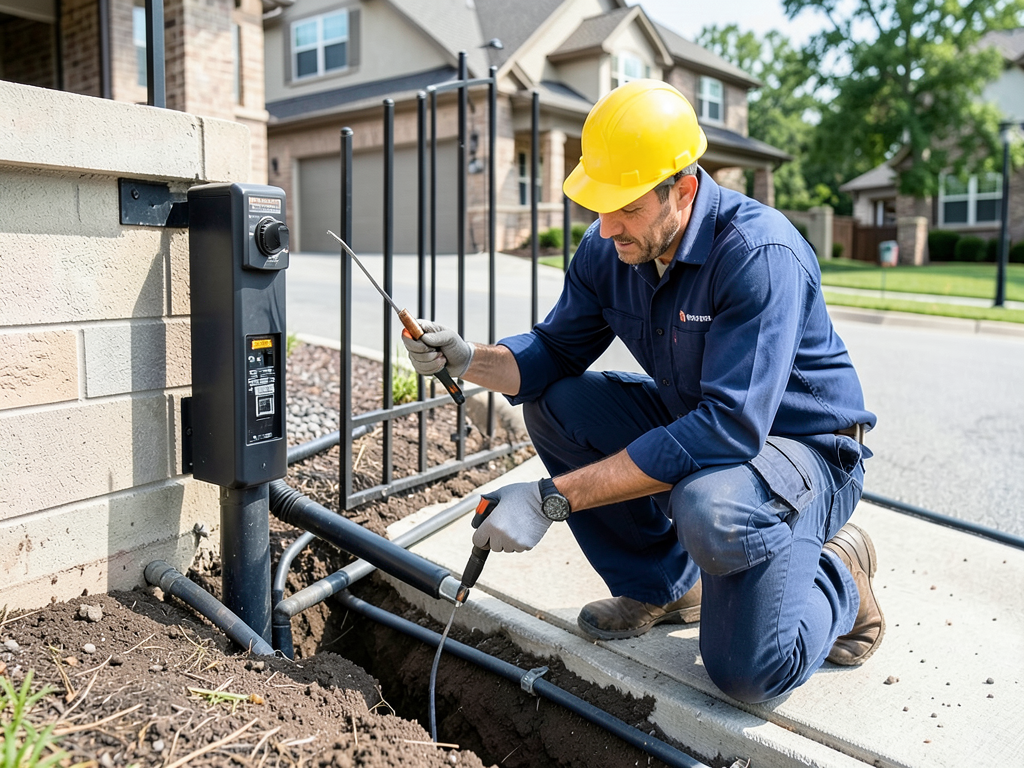
Running Power for Automated Driveway Gates in the Estate Homes of Southlake
Automated driveway gates need more than just a motor. They need proper electrical power delivery that meets local codes and survives North Texas weather. Southlake estate homes often sit on large properties where gate wiring runs long distances across driveways and landscaping. This creates unique challenges for voltage drop, trenching, and weatherproofing that standard residential wiring does not address. Texas Department of Licensing and Regulation.
Most automated gates require either 120V AC power for heavy-duty operators or 24V DC for lighter residential models. The wiring method changes based on voltage, distance, and load. For example, a 600-pound gate with a Viking access operator needs dedicated 120V circuits with proper grounding and surge protection. The wire gauge must account for voltage drop over long runs, which is common in Southlake properties where gates can be 200 feet or more from the main electrical panel. Electrical Contractor.
Trenching depth matters in the Dallas area. Expansive clay soil shifts with moisture changes, so conduit must be buried at least 18 to 24 inches deep to prevent exposure and damage. Schedule 40 PVC is standard for most applications, but Schedule 80 PVC offers better impact resistance in high-traffic areas. All outdoor wiring must use UF-rated cable or THWN conductors in conduit. Underground feeder cable without conduit is not permitted for gate wiring in Southlake. UL 325 Safety Standards.
Grounding and surge protection are critical in Southlake due to frequent lightning strikes during spring and summer storms. A proper grounding system includes a ground rod at the gate operator and surge protectors on both the primary power and low-voltage control lines. This protects the expensive gate electronics from power surges that can occur when lightning hits nearby trees or structures.. Read more about Comparing Low Voltage and Line Voltage Options for Seagoville Landscape Lighting.
Access control integration adds another layer of complexity. Intercom systems, keypads, and vehicle detection loops all run on low-voltage wiring, typically 12V to 24V DC. These systems need separate wiring paths from the main power to avoid interference. Photoelectric sensors for safety also require low-voltage lines and must be positioned to meet UL 325 entrapment protection standards. This means wiring not just for power but for safety and communication across the entire gate system.. Read more about Running Underground Power to Your New Shed or Workshop in Wilmer.
Common Gate Wiring Scenarios in Southlake
Southlake estate properties vary in layout, but most fall into a few common wiring scenarios. Understanding these helps plan the electrical scope before breaking ground.. Read more about Wiring a High Fidelity Outdoor Sound System for Your Las Colinas Backyard.
Long-Distance Power Runs
When the gate is far from the main electrical panel, voltage drop becomes a serious concern. For example, a 200-foot run to a 1/2 HP gate operator might need 10 AWG wire instead of the standard 12 AWG to maintain proper voltage at the motor. Without this adjustment, the gate may open slowly or not at all, especially in hot weather when voltage drop increases.
Multiple Control Points
Some Southlake homes have gates with multiple access points, such as a main entrance and a secondary pedestrian gate. Each control point needs its own wiring for keypads or intercoms. This means running multiple conduit lines from a central junction box, which increases trenching work but ensures reliable operation. Reliable Commercial Electrical Contractors for Businesses in Downtown Dallas.
Solar to Electric Conversions
Many older Southlake gates were installed with solar power due to the lack of nearby electrical infrastructure. Converting to electric power involves running new conduit and wiring from the house, which can be more expensive upfront but provides more reliable operation, especially during cloudy weeks or when the gate needs frequent use.
Permitting and Code Compliance in Southlake
Southlake follows the National Electrical Code with local amendments. Any new gate wiring over 50 volts requires an electrical permit from the city. The permit process includes submitting a site plan showing the gate location, proposed trenching path, and electrical load calculations. This ensures the installation meets safety standards and avoids conflicts with underground utilities.
UL 325 compliance is mandatory for all automated gates in Texas. This standard covers entrapment protection, force limitations, and safety sensor placement. The wiring must support these safety features, which means including low-voltage lines for photoelectric eyes and edge sensors. Failure to comply can result in fines and liability if someone is injured.
Southlake also requires coordination with Oncor for any new electrical service. If the gate needs a new dedicated circuit, the electrician must ensure the home’s electrical panel has capacity and that the service drop can handle the additional load. This is especially important in older Southlake homes with 100-amp service that may need an upgrade before adding heavy gate equipment.. Read more about Adding Automatic Motion Lighting to Your Walk-In Pantry in Southlake.
Materials and Methods for Reliable Gate Wiring
Choosing the right materials makes the difference between a gate that works for years and one that fails in the first storm. Here are the key components and their specifications.
Conduit Selection
Schedule 40 PVC is the most common choice for underground gate wiring. It provides adequate protection against moisture and soil pressure. For areas where vehicles might drive over the conduit, Schedule 80 PVC or rigid metal conduit offers better crush resistance. All conduit must be properly glued and have expansion fittings to handle soil movement in the clay-rich Dallas area.
Wire Gauge and Type
Wire gauge depends on the voltage, current, and distance. For a typical 120V gate operator 150 feet from the panel, 10 AWG THWN copper wire is often required. For low-voltage control circuits, 18 AWG or 16 AWG stranded wire works well for keypads and sensors. All outdoor wire must be sunlight-resistant and rated for direct burial if not in conduit.
Grounding and Surge Protection
A proper grounding system includes a ground rod at the gate operator, bonded to the control box with at least 6 AWG copper. Surge protectors should be installed at both the main panel and the gate operator to protect against lightning-induced spikes. This two-stage protection significantly reduces the risk of electronic damage.
Access Control Integration
Modern Southlake gates often include smartphone control through systems like MyQ or LiftMaster. This requires both low-voltage wiring for the control board and a reliable Wi-Fi or cellular signal at the gate. In some cases, a separate low-voltage landscape lighting circuit can share the trench, but all wiring must be properly separated by conduit to avoid interference.. Read more about Why Your Forest Hills Smart Sprinkler System Keeps Going Offline.
Installation Process and Best Practices
Proper installation starts with planning and ends with testing. Here is the typical process for gate wiring in Southlake.
Site Assessment and Planning
Before any digging, the electrician must locate all underground utilities using Texas811. This free service marks gas, water, and communication lines to prevent accidental damage. The site plan should also consider future landscaping to avoid conflicts with tree roots or irrigation lines.
Trenching and Conduit Placement
Trenches should be dug to the required depth, typically 18 to 24 inches, and kept straight to minimize conduit bends. Sharp bends make wire pulling difficult and can damage insulation. If the run must cross a driveway, a concrete-encased conduit or under-driveway tunnel is necessary to prevent damage from vehicle weight.
Wire Pulling and Connection
Wires should be pulled with plenty of slack at both ends to allow for future adjustments. Connections should be made in weatherproof junction boxes with proper strain relief. All low-voltage and high-voltage lines must be separated by at least 12 inches in the same trench, or better yet, run in separate conduits.
Testing and Commissioning
After installation, the system should be tested for voltage drop, ground resistance, and proper operation of all safety features. This includes checking that photoelectric sensors trigger correctly and that the gate stops if an object is in the path. Only after passing these tests should the system be turned over to the homeowner.
Maintenance and Troubleshooting
Even well-installed gate wiring can develop problems over time. Here are common issues and how to address them.
Corrosion and Moisture
Southlake’s humid climate can cause corrosion in outdoor electrical connections. Using dielectric grease on all connections and ensuring conduit is properly sealed helps prevent this. If a gate starts operating erratically, checking for green corrosion on terminals is a good first step.
Rodent Damage
Rodents sometimes chew through buried wiring, especially low-voltage control lines. Using metal conduit instead of PVC in problem areas can prevent this. If damage occurs, the entire run may need replacement to ensure reliability.
Voltage Drop Over Time
As gate operators age, they may draw more current, which can cause voltage drop issues even if the wiring was adequate initially. Upgrading to a larger wire gauge or adding a dedicated circuit can resolve this. Monitoring the gate’s performance and addressing slow operation early prevents complete failure.
Cost Factors for Gate Wiring in Southlake
The cost of gate wiring varies based on several factors. Here is a breakdown of what affects pricing.
| Factor | Impact on Cost | Typical Range |
|---|---|---|
| Trench Length | Longer runs require more labor and materials | $500 – $3,000 |
| Conduit Type | Schedule 80 or metal conduit costs more than Schedule 40 PVC | $200 – $1,000 |
| Wire Gauge | Larger wire for long runs adds material cost | $100 – $500 |
| Permitting | City fees and plan review time | $150 – $400 |
| Surge Protection | High-quality protectors for lightning-prone areas | $200 – $600 |
Most gate wiring projects in Southlake range from $2,000 to $8,000 depending on complexity. Factors like rock excavation, long distances, or integration with smart home systems can push costs higher.
Why Choose a Licensed Electrician for Gate Wiring
Gate wiring is not a DIY project. It requires knowledge of electrical codes, safety standards, and local regulations. A licensed electrician ensures the work is done correctly and safely, which protects your investment and your family.
Improper wiring can cause gate motors to fail prematurely, create fire hazards, or result in code violations that complicate future home sales. A professional also provides warranty on the work and can handle any necessary permits and inspections. This peace of mind is worth the investment, especially for high-value Southlake properties.
Frequently Asked Questions
How deep should gate wiring be buried in Southlake?
Gate wiring should be buried at least 18 to 24 inches deep in Southlake to protect it from soil movement and surface damage. In areas where vehicles might drive over the conduit, deeper burial or reinforced conduit is necessary.
Can I use the same conduit for power and low-voltage control wires?
No. Power and low-voltage control wires must be in separate conduits to prevent electrical interference. If they must run in the same trench, keep them at least 12 inches apart.
Do I need a permit for gate wiring in Southlake?
Yes. Any new gate wiring over 50 volts requires an electrical permit from the City of Southlake. This ensures the installation meets code and passes inspection.
What type of conduit is best for gate wiring?
Schedule 40 PVC is standard for most applications, but Schedule 80 PVC or rigid metal conduit is better for areas with vehicle traffic or where extra protection is needed.
How do I protect gate wiring from lightning?
Install surge protectors at both the main panel and the gate operator, and ensure proper grounding with a ground rod at the gate. This two-stage protection reduces the risk of lightning damage.
Ready to Power Your Southlake Estate Gate?
Automated gates add security and convenience to your property, but only if the electrical system is designed and installed correctly. From proper trenching to code-compliant wiring and surge protection, every detail matters for reliable operation.
Apex Electricians Dallas has years of experience with gate wiring in Southlake and the surrounding Dallas suburbs. We handle everything from initial planning and permitting to final testing and integration with your access control systems. Our team understands the unique challenges of North Texas soil, weather, and building codes. Electricians Balch Springs.
Don’t risk unreliable operation or safety hazards with amateur wiring. Call Apex Electricians Dallas today at (972) 823-5855 for a professional assessment of your gate wiring needs. We serve Southlake, Carrollton, DeSoto, and all Dallas suburbs with licensed, insured electrical services that protect your home and family. Electricians Duncanville.
Need emergency electrical help in Dallas? We offer 24/7 service for urgent issues. Learn more about our residential services or schedule your gate wiring consultation today.
