
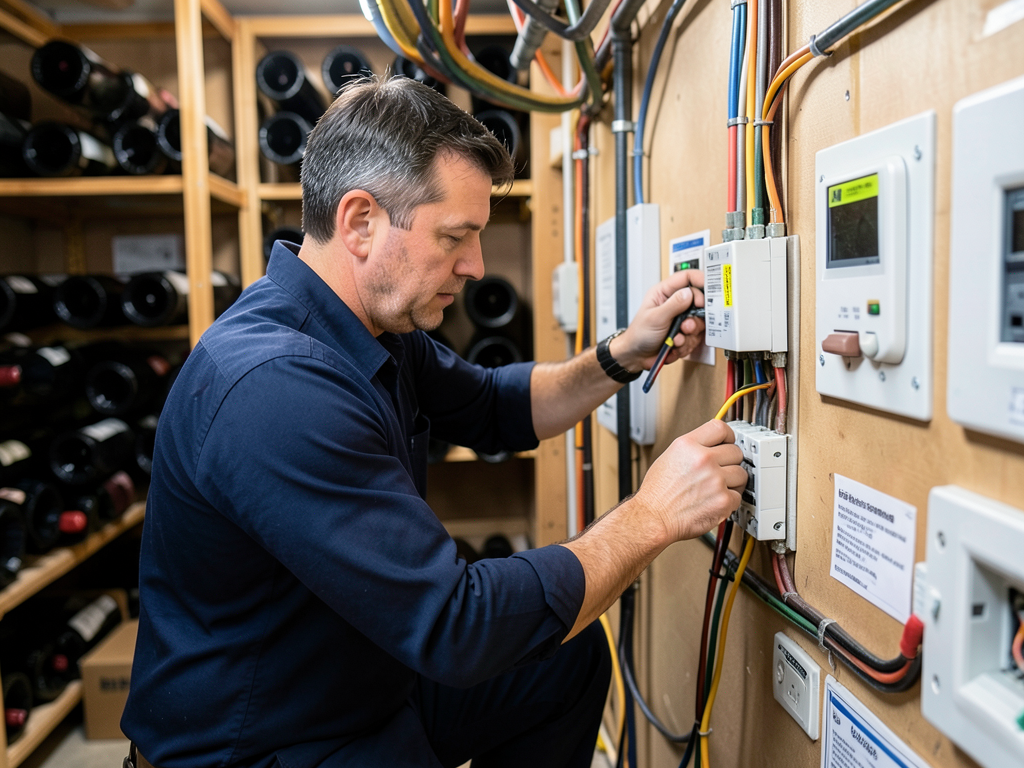
Understanding Your Wine Cellar’s Electrical Foundation
Building a climate controlled wine cellar in your Dallas home requires more than just selecting the right cooling unit. The electrical infrastructure forms the backbone of your investment protecting hundreds or thousands of bottles from temperature swings and humidity fluctuations. Many homeowners discover too late that standard residential wiring cannot handle the continuous load demands of modern wine cooling systems. Who to Call for Emergency Electrical Repair in Uptown Dallas Tonight.
Dallas presents unique challenges for wine cellar electrical planning. Our extreme summer heat means cooling units work overtime creating higher amperage draws than manufacturers typically advertise. The North Central Texas Council of Governments building codes require specific electrical configurations for dedicated cooling circuits that differ from other regions. Understanding these requirements before installation saves you from costly retrofits and potential wine spoilage. Texas Department of Licensing and Regulation.
The electrical demands start with your cooling unit but extend to lighting humidity control monitoring systems and backup power solutions. Each component requires careful consideration of voltage requirements circuit capacity and safety protocols. Professional electricians familiar with Dallas building codes understand how to integrate these systems while maintaining code compliance and protecting your valuable collection. City of Dallas.
Why Standard Residential Wiring Fails Wine Cooling Systems
Standard 15-amp circuits designed for general household use cannot reliably power wine cooling units. These systems require continuous operation with startup surges that can trip standard breakers. When a cooling unit experiences voltage drops or power interruptions the compressor may fail permanently costing you thousands in replacement and potential wine damage.
Wine cooling units operate differently than standard refrigerators. They maintain precise temperature and humidity levels 24 hours a day seven days a week creating steady electrical loads that standard circuits were never designed to handle. The startup surge when a compressor kicks on can draw three to five times its running amperage for several seconds. Standard residential breakers often cannot distinguish between a dangerous overload and this normal startup spike. Electrical Contractor.
Dallas homes particularly struggle with this issue due to our aging electrical infrastructure. Many homes in neighborhoods like Devonshire were built during the 1970s and 1980s when electrical demands were much lower. These homes often have 100-amp main panels that cannot accommodate the additional dedicated circuits required for modern wine cellars without significant upgrades.
Dedicated Circuit Requirements for Wine Cooling Units
Wine cooling units require dedicated 120-volt or 240-volt circuits depending on their size and capacity. Most residential units under 1500 cubic feet need a dedicated 15 or 20-amp 120-volt circuit. Larger commercial-grade units or cellars exceeding 2000 cubic feet typically require 240-volt circuits with 20 to 30-amp capacity. Reliable Commercial Electrical Contractors for Businesses in Downtown Dallas.
The National Electrical Code mandates that cooling units have dedicated circuits to prevent nuisance tripping and ensure continuous operation. This means the circuit serves only the cooling unit without sharing power with lights outlets or other appliances. For Dallas installations electricians must also consider the Oncor Electric Delivery service requirements and local permit specifications. Electricians Balch Springs.
Wire gauge selection becomes critical for these dedicated circuits. A 15-amp circuit requires 14-gauge wire minimum while 20-amp circuits need 12-gauge wire. Longer wire runs require larger gauges to prevent voltage drop. Dallas electricians must account for our extreme temperatures when selecting wire insulation ratings as attic temperatures can exceed 150 degrees Fahrenheit during summer months.
Hardwired vs. Plug-in Configurations
Most high-quality wine cooling units offer both hardwired and plug-in options. Hardwired installations provide cleaner aesthetics and eliminate the risk of accidental unplugging. However they require junction boxes and proper strain relief fittings that must be installed by licensed electricians.
Plug-in configurations offer flexibility for units that might need relocation but create potential failure points. The plug connection can corrode in Dallas’s high humidity and the cord may become damaged during routine maintenance. If you choose plug-in ensure the cord is rated for continuous duty and the receptacle is a commercial-grade tamper-resistant model.
For hardwired installations the electrician must install a disconnect switch within sight of the unit. This safety feature allows quick power shutdown during maintenance without accessing the main electrical panel. Dallas building codes require this disconnect to be clearly labeled and readily accessible.
Lighting and Heat Mitigation Strategies
Wine cellars require specialized lighting that produces minimal heat and no ultraviolet radiation. Standard incandescent or halogen bulbs generate enough heat to affect temperature stability and emit UV rays that can damage wine labels and potentially affect wine chemistry over time.
LED lighting has revolutionized wine cellar illumination. Modern LED fixtures produce virtually no heat and zero UV emissions while providing excellent color rendering for displaying your collection. However not all LED fixtures are created equal. Wine cellar-specific LEDs operate at 2700K to 3000K color temperature providing warm light that does not distort wine colors.
The electrical requirements for wine cellar lighting differ significantly from standard room lighting. These circuits must be separate from cooling circuits to prevent any electrical interference. Many Dallas homeowners opt for low-voltage LED systems that operate on 12 or 24 volts reducing heat generation even further and allowing for more flexible fixture placement.
Motion Sensors and Timers for Energy Efficiency
Motion-activated lighting systems prevent unnecessary energy consumption and heat generation in wine cellars. Since cellars are typically accessed infrequently motion sensors ensure lights operate only when needed. These systems must be integrated with the cooling unit’s electrical design to prevent any interference with temperature control.
Timer systems provide another layer of protection by automatically shutting off lights after a preset period. This prevents situations where someone forgets to turn off the lights allowing heat to build up over hours or days. Dallas electricians can install these controls as part of the dedicated lighting circuit ensuring they operate independently from the cooling system.
For display lighting that highlights specific bottles or racks consider installing separate low-voltage circuits with individual controls. This allows you to illuminate only the sections you are viewing without affecting the entire cellar’s temperature profile.
Climate Control and Redundancy Systems
Modern wine cellars often include more than just cooling units. Humidity control systems air circulation fans and monitoring equipment all require dedicated electrical circuits. These systems work together to maintain the ideal 55-57 degree Fahrenheit temperature and 60-70% relative humidity that preserves wine properly.
Humidity control in Dallas presents unique challenges. Our high outdoor humidity levels can cause condensation issues while our extreme temperature swings affect indoor humidity stability. Electronic humidistats and humidifiers require their own dedicated circuits to prevent interference with cooling units. These devices typically need 120-volt 15-amp circuits similar to cooling units but must operate independently.
Air circulation fans prevent temperature stratification in larger cellars. These fans run continuously at low speeds requiring minimal power but consistent operation. Dallas electricians often install these on the same dedicated circuit as the cooling unit since they operate in coordination but the fan should have its own breaker within the panel for individual control.
Smart Home Integration and Monitoring
Wine cellar monitoring systems connect to your home’s WiFi network providing real-time temperature and humidity data to your smartphone. These systems typically require a small transformer for low-voltage power and a connection to your home network. Dallas homeowners increasingly integrate these monitors with whole-home automation systems like Control4 or Crestron.
The electrical design for smart monitoring must account for power outages. Battery backup systems keep monitors operational during brief outages while cellular backup provides data transmission when WiFi fails. These backup systems require dedicated charging circuits that do not interfere with primary cooling operations.
For advanced collectors multiple sensors throughout the cellar provide zone-specific monitoring. This allows detection of cold spots near cooling units or warm areas near exterior walls. Each sensor requires power either through battery operation or low-voltage wiring connected to a central power supply.
Backup Power Solutions for Dallas Grid Reliability
Dallas experiences frequent summer thunderstorms and occasional winter freezes that can cause power outages lasting hours or days. During these outages wine cellars lose temperature control potentially ruining thousands of dollars in wine. Backup power systems have become essential for serious collectors in the Dallas area.
Standby generators provide the most reliable backup power for wine cellars. These systems automatically activate within seconds of power loss maintaining continuous operation of cooling units and monitoring systems. For Dallas homes generators must be sized to handle the continuous load of wine cellar equipment plus other essential circuits like refrigeration and HVAC. Finding a Reliable Residential Electrician in Plano for Your Kitchen Remodel.
Tesla Powerwall and similar battery backup systems offer an alternative to generators. These systems store energy during normal operation and provide seamless backup power during outages. However they typically cannot provide as much total power as generators and may require load management to prioritize cooling units over other household circuits.
Uninterruptible Power Supplies for Critical Protection
For the ultimate protection uninterruptible power supply (UPS) systems provide immediate backup power with no switching delay. These systems use batteries to power connected equipment during the seconds between power loss and generator startup. For wine cellars UPS units protect against the brief power interruptions that can reset digital controls or cause compressor short-cycling.
UPS sizing depends on the total electrical load of your wine cellar equipment. A typical 1500 cubic foot cellar with cooling unit monitoring system and humidity control might require a 1500 to 2000 VA UPS to provide 15-30 minutes of backup power. This provides ample time for generators to start or allows safe shutdown of sensitive equipment.
Dallas electricians must properly integrate UPS systems with existing electrical panels and ensure proper battery maintenance. The batteries require specific temperature ranges for optimal performance making the climate-controlled environment of a wine cellar an ideal location for UPS equipment.
Safety and Compliance Requirements
Wine cellars must comply with Dallas building codes and National Electrical Code requirements. These regulations ensure safe operation and protect your investment from electrical hazards. The City of Dallas requires permits for all new dedicated circuits and electrical panel modifications with inspections verifying compliance.
GFCI protection is required for all outlets in potentially damp locations including wine cellars. However wine cooling units should not be connected to GFCI-protected circuits due to nuisance tripping. Dallas electricians solve this by installing GFCI protection at the circuit breaker level while keeping the outlet itself on a standard circuit.
AFCI protection is required for most residential circuits in Dallas but may not be appropriate for wine cellar cooling units. AFCI breakers can nuisance trip on the inductive loads of compressor motors. Your electrician must determine the appropriate protection level based on your specific equipment and local code interpretations.
Vapor Barrier and Conduit Penetration Sealing
Wine cellars require vapor barriers to prevent moisture migration that can damage surrounding structures and affect temperature stability. All electrical penetrations through vapor barriers must be sealed with appropriate materials to maintain barrier integrity. This includes conduit entries wire penetrations and any other openings.
Dallas’s high humidity makes proper sealing critical. Even small gaps can allow moisture infiltration that condenses on cold surfaces creating mold growth and potential electrical hazards. Electricians use expanding foam sealants silicone caulk or specialized vapor barrier tapes designed for wine cellar applications.
For conduit penetrations Dallas building codes often require flexible conduit or expansion fittings to accommodate foundation movement. Our expansive clay soil can cause slight building shifts that stress rigid conduit connections. Proper expansion fittings prevent conduit damage and maintain the vapor barrier seal over time.
Dallas Permit Process and Local Requirements
Installing dedicated circuits for a wine cellar requires electrical permits from the City of Dallas. The permit process involves submitting detailed electrical plans showing circuit layouts panel modifications and equipment specifications. Dallas building inspectors verify that installations meet both NEC requirements and local amendments specific to our climate and building practices.
The permit application must include load calculations demonstrating that your electrical panel has sufficient capacity for the new circuits. Dallas electricians calculate the continuous load of wine cooling units at 125% of their rated amperage as required by NEC Article 422. This conservative approach ensures your system operates safely under maximum conditions.
Inspection requirements typically include a rough-in inspection before walls are closed and a final inspection after all equipment is installed. Dallas inspectors pay particular attention to dedicated circuit labeling proper grounding and compliance with manufacturer installation requirements. They may also verify that smoke detectors and carbon monoxide alarms are properly integrated with the new electrical work.
Insurance and Documentation Requirements
Insurance companies often require documentation of electrical modifications for high-value installations like wine cellars. Dallas homeowners should maintain records of permits inspection approvals and equipment specifications. Some insurance providers offer premium discounts for professionally installed electrical systems with proper permits and inspections.
For homes in historic districts or areas with specific architectural requirements additional approvals may be necessary. Neighborhoods like Devonshire may have overlay districts that affect exterior conduit routing or equipment placement. Your electrician should be familiar with these local requirements before beginning work.
Documentation should include equipment warranties installation certificates and contact information for qualified service technicians. This information proves invaluable if problems arise or if you sell your home and need to demonstrate the quality of electrical work to potential buyers.
Professional Installation vs. DIY Approaches
While some homeowners consider DIY electrical work to save money wine cellar installations require professional expertise. The combination of high-value equipment continuous operation requirements and safety considerations makes professional installation the only sensible choice. Dallas building codes also prohibit unlicensed individuals from performing most electrical work.
Professional electricians bring specialized knowledge of wine cellar electrical requirements that general contractors often lack. They understand the interaction between cooling units humidity control and monitoring systems. They also know how to properly size circuits for continuous loads and select appropriate wire gauges for long runs in extreme temperatures.
The cost difference between professional and DIY installation often disappears when you factor in the cost of tools materials permits and potential rework. Professional electricians complete the work correctly the first time with proper permits and inspections that protect your investment and ensure code compliance.
Choosing the Right Electrician for Your Wine Cellar
Not all electricians have experience with wine cellar installations. Look for professionals who understand dedicated circuit requirements continuous load calculations and the specific needs of climate control equipment. Ask about their experience with similar projects in Dallas and request references from satisfied customers.
Verify that your electrician holds a valid Texas electrical license and carries appropriate insurance. The Texas Department of Licensing and Regulation maintains an online license verification system. For wine cellar work look for electricians with experience in both residential and commercial refrigeration electrical systems.
Communication skills matter as much as technical expertise. Your electrician should explain the electrical design in terms you understand provide clear timelines and cost estimates and be responsive to questions throughout the project. They should also coordinate with your cooling unit installer and other tradespeople to ensure seamless integration.
Maintenance and Troubleshooting Guidelines
Even professionally installed wine cellar electrical systems require periodic maintenance. Regular inspections can identify potential problems before they cause equipment failure or wine damage. Dallas homeowners should schedule annual electrical inspections for their wine cellars similar to HVAC maintenance.
Common issues include loose connections that develop over time due to thermal cycling corrosion in humid environments and wear on disconnect switches. Professional electricians can tighten connections clean corrosion and test circuit integrity during routine maintenance visits. They can also verify that backup power systems remain operational and ready for use.
Warning signs that indicate electrical problems include frequent breaker trips dimming lights when cooling units start unusual noises from electrical panels or error codes on cooling unit displays. These symptoms often indicate overloaded circuits failing components or improper installations that require immediate professional attention.
Emergency Response Planning
Develop an emergency response plan for your wine cellar electrical system. This plan should include contact information for your electrician instructions for safely shutting down equipment and procedures for protecting your wine collection during extended outages. Dallas homeowners should also consider joining neighborhood groups where wine collectors share resources and emergency contacts.
Keep essential spare parts on hand including fuses surge protectors and thermostat batteries. While major repairs require professional service having basic replacement parts can resolve minor issues quickly and prevent temperature excursions that could damage wine. Your electrician can recommend appropriate spare parts based on your specific equipment.
Document your system thoroughly including circuit breaker locations equipment model numbers and maintenance records. This information helps electricians diagnose problems quickly and ensures proper replacement of components with compatible parts. Store this documentation in a cool dry location outside your wine cellar to ensure accessibility during emergencies.
Cost Considerations and Value Protection
The electrical infrastructure for a wine cellar represents a significant portion of the total installation cost. While it may be tempting to cut corners on electrical work this approach often leads to higher costs from equipment failure wine damage or necessary retrofits. View electrical work as an investment in protecting your wine collection rather than an expense to minimize.
Factors affecting electrical costs include the distance from your main electrical panel to the wine cellar the complexity of your cooling system and any necessary panel upgrades. Dallas homes with older electrical systems may require substantial upgrades to accommodate new dedicated circuits safely. These upgrades while expensive provide benefits beyond the wine cellar by improving your home’s overall electrical capacity.
Consider the long-term value of professional electrical installation. Properly installed systems operate more efficiently experience fewer failures and maintain better temperature stability. This reliability translates to better wine preservation and potentially higher resale value for your home. Many buyers view professional wine cellar installations as premium features that justify higher asking prices.
Energy Efficiency and Operating Costs
Wine cellar electrical systems operate continuously making energy efficiency an important consideration for operating costs. Modern cooling units offer various efficiency levels with higher efficiency models typically requiring more sophisticated electrical installations. The initial cost premium for efficient equipment often pays for itself through lower operating costs over the system’s lifetime.
Proper electrical design contributes to energy efficiency. Correctly sized circuits prevent voltage drops that force cooling units to work harder. Proper grounding and surge protection prevent electrical noise that can interfere with control systems. Even the placement of electrical panels and disconnects affects efficiency by minimizing wire run lengths and reducing resistance losses.
Dallas homeowners can further reduce operating costs through smart energy management. Some utilities offer time-of-use rates that make overnight operation cheaper than daytime operation. While wine cellars must maintain constant temperatures some systems can take advantage of cooler nighttime temperatures to reduce cooling loads during expensive peak hours.
Future-Proofing Your Wine Cellar Electrical System
Wine collecting often becomes a long-term passion with collections growing over time and technology evolving. Design your electrical system with future expansion in mind. This might include installing larger capacity circuits than currently needed running extra conduit for future wiring or installing a more robust electrical panel than immediately required.
Consider potential upgrades when planning your electrical infrastructure. You might eventually want to add a second cooling unit for larger collections install advanced monitoring with multiple sensors or integrate your cellar with a whole-home automation system. Installing extra capacity now prevents costly electrical modifications later.
Technology continues to advance in wine storage with new cooling technologies monitoring systems and control interfaces emerging regularly. Your electrical system should accommodate these changes through modular design adequate power capacity and flexible control wiring. This forward-thinking approach ensures your investment remains valuable as your collecting interests evolve.
Frequently Asked Questions
What size circuit breaker do I need for a wine cooling unit?
Most residential wine cooling units under 1500 cubic feet require a dedicated 15 or 20-amp 120-volt circuit. Larger units or commercial-grade systems may need 240-volt circuits with 20 to 30-amp capacity. Always check the manufacturer’s specifications and have a licensed electrician verify the requirements for your specific unit.
Can I install a wine cellar in my existing home or do I need new construction?
Wine cellars can be installed in existing homes but the electrical requirements remain the same. You may need to run new wiring from your electrical panel to the cellar location which can be challenging in finished homes. Professional electricians can often fish wires through existing walls or run surface-mounted conduit if interior routing proves difficult.
How much does it cost to install electrical circuits for a wine cellar?
Electrical installation costs vary based on distance from the panel circuit complexity and any necessary upgrades. Simple installations might cost $500 to $1000 while complex projects requiring panel upgrades or long wire runs can exceed $3000. These costs do not include the cooling unit or other equipment only the electrical infrastructure.
Do I need permits for wine cellar electrical work in Dallas?
Yes the City of Dallas requires permits for all new dedicated circuits and electrical panel modifications. This includes wine cellar installations. Permits ensure the work meets code requirements and must pass inspection before the system can be used. Your electrician should handle the permit process as part of their service.
Can I use my existing electrical panel for a wine cellar or do I need an upgrade?
This depends on your panel’s capacity and existing load. Many older Dallas homes have 100-amp panels that may not have available capacity for dedicated wine cellar circuits. A qualified electrician must perform a load calculation to determine if your panel can handle the additional circuits or if an upgrade is necessary.
What happens if my wine cellar loses power during a storm?
Without backup power your wine cellar will gradually warm to room temperature during an outage. This can damage wine especially if temperatures exceed 70 degrees Fahrenheit for extended periods. Backup power systems like generators or battery backups maintain temperature control during outages protecting your collection from Dallas’s frequent summer thunderstorms and occasional winter freezes.
- Assess Your Electrical Capacity
Have a licensed electrician evaluate your main electrical panel to determine available capacity for dedicated wine cellar circuits. Dallas homes often need upgrades to handle modern wine cooling equipment.
- Plan Dedicated Circuits
Design separate circuits for cooling units lighting humidity control and monitoring systems. Each circuit must be properly sized based on equipment specifications and continuous load requirements.
- Install Proper Protection
Include appropriate circuit breakers surge protection and disconnect switches. Dallas building codes require specific protection levels based on equipment type and location.
- Consider Backup Power
Evaluate backup power options like generators or battery systems to protect against Dallas power outages. Size backup systems to handle your cooling unit’s continuous load plus other essential circuits.
- Obtain Permits and Inspections
Secure necessary permits from the City of Dallas and schedule required inspections. This ensures code compliance and protects your investment through proper documentation.
Protect Your Wine Collection with Professional Electrical Installation
Your wine collection represents a significant investment that deserves professional protection through proper electrical installation. The extreme Dallas climate frequent power fluctuations and specific building code requirements make professional expertise essential for wine cellar electrical work. Don’t risk your valuable collection on DIY electrical work or inexperienced contractors.
Professional electricians understand the unique challenges of Dallas wine cellar installations. They know how to properly size circuits for continuous wine cooling loads navigate local permit requirements and integrate backup power systems that protect against our frequent storms and occasional grid instability. Their expertise ensures your system operates reliably for years while maintaining code compliance.
Ready to install or upgrade your wine cellar electrical system? Contact our experienced Dallas electricians today at (972) 823-5855 for a professional evaluation. We’ll assess your current electrical capacity design a system that protects your collection and handle all permitting and inspections. Don’t leave your wine investment to chance – trust the local experts who understand Dallas’s unique electrical challenges. For more information, visit North Central Texas Council of Governments.
