
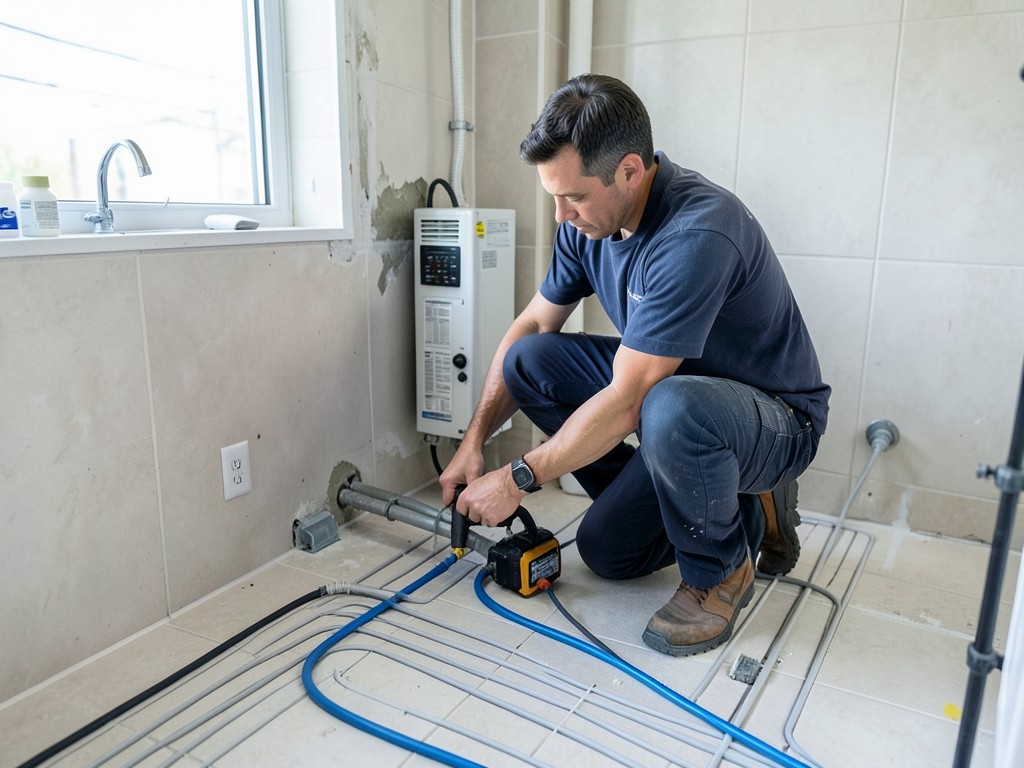
What to Know Before Installing Radiant Electric Floor Heating in Greenway Parks
Homeowners in Greenway Parks are increasingly considering electric radiant floor heating for bathroom and kitchen renovations. This system offers a luxurious upgrade that eliminates cold tile underfoot during North Texas winters. Before committing to installation, understanding the electrical requirements, operating costs, and local climate factors will help you make an informed decision. Texas Department of Licensing and Regulation.
How Electric Radiant Floor Heating Works
Electric radiant floor heating uses thin heating cables or mats installed beneath your finished flooring. These cables generate heat through electrical resistance, warming the floor surface and radiating heat upward into the room. Unlike forced-air systems that blow hot air, radiant heat provides uniform warmth without drafts or noise. Who to Call for Emergency Electrical Repair in Uptown Dallas Tonight.
The system operates on a dedicated 120-volt or 240-volt circuit controlled by a programmable thermostat. When activated, electricity flows through the heating elements, creating consistent floor temperatures between 80-90°F for comfort.
Benefits of Electric Floor Heating in Dallas Homes
Uniform Heat Distribution
Traditional heating systems create hot and cold spots throughout a room. Radiant floor heating eliminates these temperature variations by warming the entire floor surface evenly. This means no more stepping onto freezing bathroom tile during January mornings when North Texas experiences cold fronts.
Energy Efficiency and Zone Control
Electric radiant systems allow you to heat specific rooms rather than the entire house. You can program the bathroom floor to warm up just before your morning shower and turn off during the day when the space is unoccupied. This targeted heating can reduce overall energy consumption compared to heating unused areas.
Hypoallergenic Operation
Unlike forced-air systems that circulate dust and allergens, radiant floor heating produces no airborne particles. This makes it an excellent choice for homeowners with allergies or respiratory sensitivities. The system also operates silently, eliminating the noise from traditional heating equipment.
Space Saving Design
Since the heating system is embedded in the floor, you gain valuable wall space by eliminating radiators or baseboard heaters. This creates a cleaner aesthetic and more flexible furniture placement options in your renovated spaces.
Potential Drawbacks to Consider
Initial Installation Costs
Electric radiant floor heating typically costs between $10-20 per square foot for materials and installation. For a standard bathroom in a Greenway Parks home, this translates to $1,500-3,000 for the heating system alone. This investment is in addition to your flooring costs and any necessary electrical panel upgrades. Electrical Contractor.
Floor Height Increases
Installing radiant heating adds approximately 1/8 to 1/4 inch to your floor height. While this seems minimal, it can create transition issues at doorways and require adjustments to baseboards or door clearances. In homes with existing tile floors, this may necessitate door trimming or threshold modifications.
Repair Challenges
If a heating cable fails after installation, locating and repairing the damaged section requires removing the finished flooring. This can be costly and time-consuming. However, modern systems include diagnostic features that help pinpoint problems before demolition begins.
Electrical Load Requirements
Electric floor heating draws significant power. A typical bathroom system requires a dedicated 15-20 amp circuit. Older Greenway Parks homes built before 1990 may need electrical panel upgrades to accommodate this additional load, especially if other high-demand appliances share the same panel.
Dallas-Specific Considerations: Cost and Climate
North Texas experiences mild winters compared to northern states, making electric radiant heating an ideal supplemental system rather than a primary heat source. The system excels at taking the chill off tile floors during brief cold spells rather than providing continuous heating throughout long winters.
Electricity costs in the Dallas area average 12-14 cents per kilowatt-hour through Oncor Electric Delivery. A typical bathroom floor heating system consumes 300-500 watts per hour. Running the system for 4-6 hours daily during winter months adds approximately $15-25 to your monthly electric bill. Oncor Electric Delivery.
Dallas’s clay soil and slab-on-grade construction present unique installation considerations. Proper insulation beneath the heating elements prevents downward heat loss into the concrete slab. Without adequate thermal breaks, you could lose 30% of your heating efficiency.
Electric vs. Hydronic (Liquid) Systems
Homeowners often wonder whether electric or hydronic systems better suit their needs. Here’s how they compare for Dallas-area applications:
| Feature | Electric Systems | Hydronic Systems |
|---|---|---|
| Installation Cost | $10-20/sq ft | $15-25/sq ft |
| Installation Time | 1-2 days | 3-5 days |
| Best For | Single rooms, retrofits | New construction, whole-house |
| Maintenance | Minimal | Annual boiler service |
| Energy Source | Electricity | Natural gas/boiler |
| Response Time | 30-60 minutes | 2-4 hours |
For most Greenway Parks bathroom and kitchen renovations, electric systems offer faster installation and lower upfront costs. Hydronic systems make more sense for whole-house new construction or extensive additions where the higher installation costs can be amortized over a larger area.
Installation Requirements and Building Codes
Installing electric floor heating in Dallas requires compliance with National Electrical Code (NEC) requirements and local permitting. The City of Dallas requires electrical permits for all new circuit installations, including dedicated circuits for floor heating systems.
Key installation requirements include:
- Dedicated GFCI-protected circuit for the heating system
- Proper thermostat placement away from direct sunlight and drafts
- Floor temperature sensors for safety shutoff
- Insulation boards beneath heating elements on concrete slabs
- Manufacturer-approved installation methods and spacing
Most installations require inspection by Dallas building officials before flooring is installed over the heating system. This ensures proper wiring, circuit protection, and temperature controls are in place.
Popular Flooring Options for Radiant Heat
Not all flooring materials work equally well with electric radiant heating. Here are the best options for Dallas homes:
| Floor Type | Heat Transfer Efficiency | Installation Notes |
|---|---|---|
| Ceramic/Porcelain Tile | Excellent | Most common choice; handles high temperatures well |
| Natural Stone | Excellent | Requires careful temperature control to prevent cracking |
| Luxury Vinyl Plank | Good | Check manufacturer temperature limits; many allow up to 82°F |
| Engineered Hardwood | Fair | Requires engineered products rated for radiant heat |
| Laminate | Fair | Verify compatibility; some products warp with heat |
Ceramic and porcelain tiles remain the most popular choice for Dallas bathrooms and kitchens due to their excellent heat conductivity and durability in humid conditions. These materials heat quickly and maintain consistent temperatures well.
Smart Controls and Energy Management
Modern electric floor heating systems integrate with smart home technology for enhanced control and efficiency. Programmable thermostats allow you to set heating schedules that match your daily routine, warming floors just before you wake up or return home.
Many systems now offer Wi-Fi connectivity, allowing you to control floor temperatures from your smartphone. This means you can turn on the bathroom floor while still in bed on cold mornings or adjust settings remotely when your schedule changes.
Some advanced systems include floor sensors that prevent overheating and energy waste. These sensors maintain floor temperatures within a comfortable range while preventing the system from running unnecessarily.
Frequently Asked Questions
Can I install electric floor heating under existing tile?
No. Electric radiant heating must be installed during flooring replacement. The heating elements go between the subfloor and the finished flooring, requiring complete floor removal and replacement.
How long does it take for the floor to warm up?
Most electric systems reach comfortable temperatures within 30-60 minutes. This relatively quick response time makes them practical for on-demand use rather than continuous operation.
Will electric floor heating increase my home’s value in Greenway Parks?
Radiant floor heating often appeals to luxury home buyers and can be a selling point in high-end renovations. However, the value increase typically doesn’t equal the installation cost. Consider it primarily for your comfort rather than as a pure investment.
Do I need to upgrade my electrical panel?
This depends on your home’s age and existing electrical load. Homes built before 1990 in Greenway Parks often have 100-amp panels that may need upgrading to 150-200 amps to accommodate additional circuits safely.
Can I install electric floor heating myself?
While DIY installation is possible, professional installation ensures proper electrical connections, code compliance, and warranty protection. Incorrect installation can create fire hazards or system failures.
Finding the Right Contractor in Greenway Parks
Electric floor heating installation requires both electrical expertise and flooring knowledge. Look for licensed electricians with specific experience in radiant heating systems. They should understand both the electrical requirements and the nuances of different flooring materials. Electricians Balch Springs.
Ask potential contractors about their experience with similar projects in Greenway Parks and surrounding areas like University Park and Highland Park. Request references and verify their Texas electrical license through the Texas Department of Licensing and Regulation.
A qualified contractor will perform a load calculation on your electrical panel, recommend appropriate insulation methods for your slab construction, and provide detailed installation plans that comply with Dallas building codes.
Making Your Decision
Electric radiant floor heating offers significant comfort benefits for Greenway Parks homeowners undertaking bathroom or kitchen renovations. The system works particularly well in North Texas’s mild climate, providing targeted warmth during brief cold periods without the need for continuous operation.
Consider your specific needs: if you enjoy the luxury of warm tile floors during winter mornings and plan to renovate anyway, the additional cost may be worthwhile. However, if you’re on a tight budget or your electrical panel needs extensive upgrades, you might explore alternative heating options.
The key is working with experienced professionals who understand both the electrical requirements and the local building conditions specific to Greenway Parks and Dallas-area homes. Proper planning and installation ensure years of comfortable, efficient operation.
Ready to explore electric floor heating for your Greenway Parks home? Call Apex Electricians Dallas at (972) 823-5855 for a professional assessment of your electrical system and a detailed installation estimate. Our licensed electricians have extensive experience with radiant heating systems in North Texas homes.
