
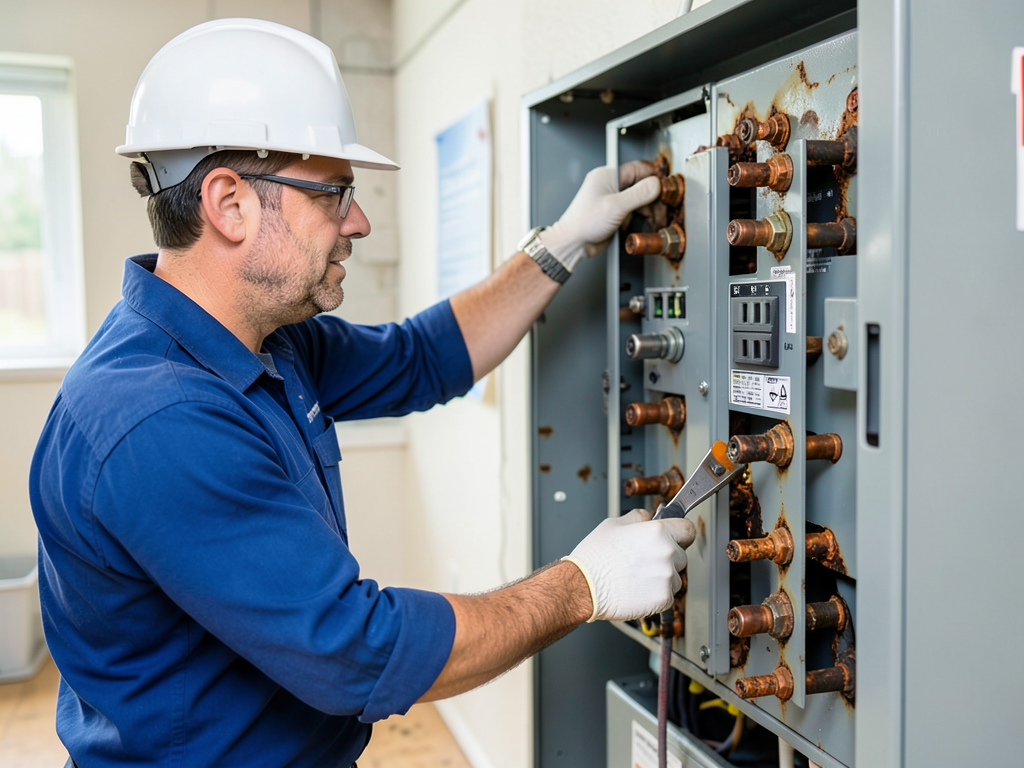
How Humidity and Lake Life Can Corrode Your Electrical Panel in Rowlett
Living near Lake Ray Hubbard in Rowlett means enjoying beautiful waterfront views and a vibrant lakeside lifestyle. But that same proximity to water creates a hidden threat to your home’s electrical system. The combination of high humidity, lake moisture, and salt air can silently corrode your electrical panel, turning a critical safety device into a potential fire hazard. Who to Call for Emergency Electrical Repair in Uptown Dallas Tonight.
Electrical panels in Rowlett face unique challenges that homeowners in drier parts of Dallas never encounter. The constant moisture in the air accelerates oxidation on copper bus bars and steel breaker housings. When you add the occasional flooding from heavy storms or the persistent dampness near the lake, your panel becomes a prime target for corrosion that can compromise your entire electrical system. Electrical Contractor.
Understanding how this corrosion develops and recognizing the warning signs early can save you from costly repairs and dangerous electrical failures. Let’s examine what’s really happening inside your panel and what you can do to protect your Rowlett home.
Understanding Corrosion in Rowlett’s Climate
Corrosion is essentially the slow destruction of metal through chemical reactions with the environment. In Rowlett, the main culprit is humidity combined with airborne contaminants from the lake. When moisture settles on metal surfaces inside your electrical panel, it creates the perfect conditions for oxidation and rust formation.
The process accelerates when temperatures fluctuate dramatically, which happens frequently in North Texas. Hot, humid days followed by cooler nights cause condensation to form inside your panel. This moisture cycle repeats continuously, gradually breaking down protective coatings and exposing bare metal to further damage. Texas Department of Licensing and Regulation.
Lake Ray Hubbard contributes additional factors. The water contains dissolved minerals and sometimes salt from road treatments that get carried by wind. These microscopic particles settle on your electrical equipment and, when combined with humidity, create an electrolyte solution that speeds up corrosion dramatically.
Older homes in neighborhoods like those near Liberty Grove Park or the subdivisions along Lakeview Parkway are particularly vulnerable. Many were built before modern moisture-resistant panel designs became standard, leaving them exposed to decades of environmental stress.
Common Warning Signs of Panel Corrosion
Recognizing corrosion early can prevent serious electrical problems. Here are the most common signs that your electrical panel may be suffering from moisture damage:
- Visible rust or discoloration on the panel door, breaker handles, or mounting hardware
- White powdery residue on aluminum components or copper bus bars
- Green or blue discoloration on copper connections indicating oxidation
- Musty or burning odors coming from the panel area
- Warm spots on the panel surface during normal operation
These visual indicators often appear before any electrical problems become obvious. However, by the time you can see corrosion on the outside, significant damage may already exist inside the panel where you can’t see it.
Pay special attention if you notice your breakers feeling stiff or difficult to reset. This resistance often indicates internal corrosion on the contact points, which can lead to arcing and overheating even if the breaker appears to function normally.
Hidden Dangers You Can’t See
The most dangerous corrosion occurs where you can’t observe it directly. Inside your electrical panel, moisture can seep into breaker mechanisms, corrode the copper bus bars where breakers connect, and damage the main lugs that carry power from your meter.
When corrosion affects these critical components, several dangerous situations can develop:
- Arcing between corroded contacts creates intense heat and can ignite nearby materials
- Increased resistance in electrical connections causes voltage drops and overheating
- Breaker failure where the breaker won’t trip during overloads, removing your fire protection
- Insulation breakdown on wires near corroded areas, creating shock hazards
Many Rowlett homeowners first discover these problems when a circuit suddenly stops working or when they experience unexplained power outages. By this point, the corrosion has often progressed to the point where panel replacement becomes necessary rather than simple repairs.. Read more about Why Every Cockrell Hill Homeowner Needs a Clearly Labeled Electrical Panel.
Performance Issues That Signal Trouble
Corrosion doesn’t just create safety hazards it also causes frustrating performance problems throughout your home. These symptoms often appear gradually, making them easy to overlook until they become severe.
Flickering lights when appliances start up indicate voltage fluctuations caused by poor connections in your panel. Your air conditioner, refrigerator, or pool pump may cause lights to dim momentarily because corroded connections can’t maintain stable voltage under load.
Breakers that won’t reset or seem to trip randomly often have internal corrosion preventing proper contact. The breaker may appear to reset but still not allow power to flow to the circuit, leaving you puzzled about why an outlet or light won’t work.
Appliances running hotter than normal or failing prematurely can result from low voltage caused by corroded connections. Motors and electronics need consistent voltage to operate efficiently, and poor connections force them to work harder, generating excess heat and reducing lifespan.
Residents in older sections of Rowlett near Main Street or in established neighborhoods off Liberty Grove Road often report these exact symptoms, especially during the summer months when electrical demand is highest.
Why Rowlett Homes Face Unique Risks
Rowlett’s specific geography creates conditions that accelerate electrical panel corrosion compared to other Dallas suburbs. Understanding these factors helps explain why your neighbor across town might have a perfectly fine panel while yours shows significant corrosion.
Lake proximity means constant exposure to higher humidity levels. Areas within a few miles of Lake Ray Hubbard consistently experience 5-10% higher relative humidity than neighborhoods further inland. This sustained moisture exposure dramatically increases corrosion rates.
Age of local housing stock plays a major role. Many Rowlett homes were built during the 1970s and 1980s boom, meaning electrical panels are now 40-50 years old. These panels were designed for different environmental standards and often lack modern moisture protection features.
Building practices from earlier eras sometimes placed electrical panels in garages or exterior locations without adequate weather protection. Today’s building codes require specific clearances and protective measures, but older installations may still have panels exposed to direct moisture contact.
Local soil conditions affect grounding systems that connect to your panel. Rowlett’s combination of clay soil and occasional flooding can cause ground rod connections to corrode, creating ground faults that introduce moisture into the electrical system.
The Science Behind Panel Corrosion
Understanding the chemistry helps explain why corrosion accelerates so rapidly in humid environments. When water molecules contact metal surfaces, they can break down into hydrogen and oxygen. The oxygen then bonds with metal atoms, creating metal oxides that we recognize as rust or corrosion.
Copper, commonly used in bus bars and wiring, forms copper oxide that appears as a greenish-blue patina. While this layer can sometimes protect the underlying metal, in electrical applications it creates resistance that generates heat and reduces efficiency.. Read more about Wiring a High Fidelity Outdoor Sound System for Your Las Colinas Backyard.
Aluminum, often used in branch circuit wiring and some panel components, corrodes differently. It forms aluminum oxide that appears as a white powdery substance. This corrosion is particularly problematic because aluminum oxide is an excellent electrical insulator, completely blocking current flow.
Steel components in your panel, including the enclosure and some breaker housings, rust through a different process. Iron in the steel combines with oxygen and water to form iron oxide, which flakes away and exposes fresh metal to continued corrosion in a destructive cycle.
The presence of salts from lake water or road treatments dramatically accelerates all these processes. Salt water is much more conductive than fresh water, creating stronger electrical currents between different metals that speed up galvanic corrosion.
Comparing Healthy vs. Corroded Panels
The difference between a healthy electrical panel and a corroded one becomes obvious when you know what to look for. Here’s a comparison of key indicators:
| Component | Healthy Condition | Corroded Condition |
|---|---|---|
| Breaker Handles | Smooth, clean plastic with clear markings | Sticky, discolored, or showing white residue |
| Bus Bars | Bright copper or silver-plated surfaces | Greenish-blue oxidation or white powder |
| Ground Bars | Clean, tight connections with no visible corrosion | White or green buildup on terminals |
| Main Lugs | Shiny metal with tight, clean connections | Dark discoloration or visible rust |
| Panel Interior | Dry, clean surfaces with no moisture | Water stains, rust spots, or condensation |
This comparison shows why regular inspection by a qualified electrician is crucial. Many corrosion problems start inside the panel where you can’t see them during casual observation.
Safety Risks and Fire Hazards
Corroded electrical panels create serious safety hazards that every Rowlett homeowner should understand. The combination of electricity and corrosion can lead to situations that put your family and property at risk.
Electrical fires represent the most severe danger. When corrosion creates resistance at connection points, electricity must force its way through, generating intense heat. This heat can ignite surrounding materials, including the panel itself, wall studs, or nearby insulation.
Breaker failure occurs when corrosion prevents the mechanical components from operating correctly. A breaker that can’t trip during an overload fails to provide its intended protection, allowing dangerous current levels to continue flowing and potentially causing fires.
Arc faults happen when electricity jumps across small gaps created by corrosion. These arcs produce temperatures exceeding 10,000 degrees Fahrenheit, hot enough to melt metal and ignite wood instantly. Arc faults often occur without tripping breakers, making them particularly dangerous.
Shock hazards develop when corrosion damages insulation or creates unintended electrical paths. Touching a corroded panel or nearby metal surfaces could result in dangerous or fatal electric shock, especially in damp conditions common near Lake Ray Hubbard.
Prevention and Protection Strategies
While you can’t eliminate humidity in Rowlett, you can take steps to protect your electrical panel from corrosion damage. These strategies focus on reducing moisture exposure and maintaining proper ventilation.
Proper sealing around service entrance cables prevents moisture from entering the panel. Weatherproof fittings and proper caulking around where wires enter the panel create barriers against humidity infiltration.
Adequate ventilation allows moisture to escape rather than accumulate. Ensure your panel has proper clearance from walls and that ventilation slots aren’t blocked by stored items or debris.
Dehumidification in areas where panels are located can significantly reduce moisture exposure. Small dehumidifiers in garages or utility rooms where panels are often installed can maintain humidity levels below the threshold where corrosion accelerates.
Regular maintenance by qualified electricians includes checking for early signs of corrosion, tightening connections that may have loosened due to thermal cycling, and applying protective coatings to vulnerable components.
Consider scheduling inspections during Rowlett’s wettest months, typically May through October, when humidity levels are highest and corrosion risks peak.
When Replacement Becomes Necessary
Sometimes corrosion damage progresses beyond the point where repairs make economic sense. Understanding when replacement is the better option helps you make informed decisions about your home’s electrical safety.
Age considerations play a significant role. Panels over 25 years old, even without visible corrosion, may lack modern safety features and have components nearing the end of their service life. The combination of age and corrosion often makes replacement the most cost-effective solution.
Extent of damage determines whether repairs are feasible. If corrosion affects critical components like the main bus bars or multiple breakers, the cost and complexity of repairs often exceeds replacement costs while providing less reliable results.
Code compliance becomes important when corrosion damage requires repairs. Modern electrical codes have evolved significantly, and bringing an old, corroded panel up to current standards may require extensive modifications that make replacement more practical.
Future electrical needs should factor into your decision. If you’re planning home additions, EV charger installation, or other electrical upgrades, a new panel provides the capacity and reliability needed for modern electrical demands.
Professional Inspection and Testing
DIY inspection of electrical panels carries serious risks and often misses critical problems. Professional electricians use specialized tools and techniques to assess panel condition accurately and safely. Electricians Balch Springs.
Infrared thermography allows technicians to see heat patterns that indicate poor connections or overloading. Corroded connections often show as hot spots even when the panel appears normal to visual inspection.
Resistance testing measures the electrical resistance of connections that should have minimal resistance. Elevated readings indicate corrosion or loose connections that could cause problems.
Megohmmeter testing checks the insulation resistance of wires and components. Degraded insulation from heat or age shows up as reduced resistance readings, indicating potential failure points.
Load testing evaluates how the panel performs under typical operating conditions. This testing can reveal problems that only appear when the panel is under electrical load, such as voltage drops or overheating.
Professional inspections typically take 1-2 hours and provide detailed reports on panel condition, recommended repairs, and replacement options if needed.
Local Building Codes and Requirements
Rowlett and Dallas County electrical inspections follow specific requirements that affect how corrosion issues must be addressed. Understanding these regulations helps ensure your repairs or replacements meet all legal standards.
Panel clearance requirements mandate specific distances from walls, ceilings, and other obstructions. These clearances ensure proper ventilation and safe access for maintenance, both critical for preventing moisture-related problems.
Weatherproof ratings determine where panels can be installed and what protection they need. Panels in garages, exterior locations, or near lake areas may require specific NEMA ratings for moisture protection.
Grounding requirements have evolved significantly. Modern codes require specific grounding electrode systems that provide better protection against electrical faults and help prevent moisture-related issues from affecting your entire electrical system.
Permit requirements for panel work ensure inspections verify compliance with all applicable codes. These permits protect homeowners by ensuring work meets safety standards and passes inspection before being considered complete.
Cost Factors for Repair vs. Replacement
Understanding the financial aspects of addressing panel corrosion helps you budget appropriately and make informed decisions. Several factors influence whether repair or replacement makes more sense for your situation.
Repair costs vary based on damage extent. Simple cleaning and tightening of connections might cost a few hundred dollars, while replacing multiple breakers and repairing bus bars could run $500-1,000 or more.
Replacement costs depend on panel size and features. A standard 200-amp panel replacement typically ranges from $1,500-3,000 including labor, permits, and inspection fees. Larger or specialized panels cost more.
Additional costs often arise during panel work. Upgrading grounding systems, adding surge protection, or bringing old wiring up to code can add $500-2,000 to the project cost.
Emergency service premiums apply when corrosion causes immediate problems requiring urgent attention. Weekend or after-hours service typically costs 1.5-2 times standard rates.
Many Rowlett homeowners find that replacement, while more expensive initially, provides better long-term value through improved reliability, safety features, and warranty coverage.
Choosing the Right Electrician
Not all electrical contractors have the same level of expertise with corrosion-related issues. Selecting the right professional ensures your panel receives proper assessment and appropriate solutions.
License verification is essential. Texas requires electricians to hold valid licenses, and specialized work like panel repairs or replacements demands higher-level licensing. Always verify license status through the Texas Department of Licensing and Regulation.
Experience with local conditions matters significantly. Electricians familiar with Rowlett’s specific challenges understand how lake proximity and local climate affect electrical systems differently than inland areas.
Insurance coverage protects you from liability if accidents occur during work. Ensure your contractor carries both liability insurance and workers’ compensation coverage.
Warranty offerings indicate contractor confidence in their work. Reputable electricians typically offer 1-2 year warranties on labor, with some providing longer coverage on specific components.
References and reviews from other Rowlett homeowners provide insight into contractor reliability and quality. Look for feedback specifically mentioning panel work and corrosion-related repairs.
Frequently Asked Questions
How often should I have my electrical panel inspected for corrosion?
Professional inspection every 2-3 years is recommended for most homes. If you live within one mile of Lake Ray Hubbard or in an area with high humidity, annual inspections provide better protection against corrosion-related problems.
Can I clean corrosion off my electrical panel myself?
No. Working inside electrical panels carries serious shock hazards, and improper cleaning can damage components or create new problems. Even licensed electricians use specialized tools and follow specific safety procedures when addressing corrosion.
Does homeowners insurance cover corrosion damage?
Standard policies typically don’t cover corrosion damage, viewing it as a maintenance issue rather than sudden damage. However, if corrosion leads to a fire or other covered peril, related damages might be covered. Check your specific policy details.
How long does electrical panel replacement take?
Most residential panel replacements take 4-8 hours for the electrical work itself. However, the complete process including permits, inspections, and utility coordination often spans 1-2 weeks from start to finish.
What are the signs that corrosion has become dangerous?
Immediate attention is needed if you notice burning smells, see sparking or arcing, hear buzzing or crackling sounds, or experience frequent breaker trips. These symptoms indicate dangerous conditions requiring emergency service.
Protecting Your Rowlett Home’s Electrical Future
Electrical panel corrosion in Rowlett isn’t just an inconvenience it’s a serious safety issue that requires attention from qualified professionals. The unique combination of lake proximity, high humidity, and aging housing stock creates conditions where corrosion can develop rapidly and cause significant damage.
Understanding the warning signs, knowing when to call for professional help, and taking preventive measures can protect your home from the dangers of corroded electrical panels. Regular inspections, proper maintenance, and timely upgrades when necessary ensure your electrical system remains safe and reliable for years to come. Finding a Reliable Residential Electrician in Plano for Your Kitchen Remodel.
Don’t wait for corrosion to cause a dangerous failure. If you’ve noticed any warning signs or if your panel is over 20 years old, schedule a professional inspection today. The cost of preventive maintenance is minimal compared to the expense and danger of emergency repairs or fire damage.
Your family’s safety and your home’s electrical reliability depend on addressing corrosion issues before they become critical. Take action now to protect what matters most.
- Schedule Professional Inspection
Contact a licensed electrician to examine your panel for corrosion signs, especially if you live near Lake Ray Hubbard or in an older Rowlett home.
- Monitor Warning Signs
Watch for flickering lights, warm panel surfaces, burning odors, or breakers that won’t reset. These symptoms indicate potential corrosion problems.
- Improve Environmental Conditions
Reduce moisture exposure through proper sealing, ventilation, and dehumidification in areas where your panel is located.
- Plan for Upgrades
If your panel is over 20 years old or shows significant corrosion, budget for replacement to ensure continued safety and reliability.
Ready to protect your Rowlett home from electrical panel corrosion? Call Apex Electricians Dallas today at (972) 823-5855 for a comprehensive inspection and expert recommendations. Our licensed technicians understand Rowlett’s unique environmental challenges and provide solutions that keep your family safe and your electrical system reliable. Reliable Commercial Electrical Contractors for Businesses in Downtown Dallas.
Don’t let humidity and lake life compromise your home’s electrical safety. Contact us now to schedule your inspection and take the first step toward protecting your investment and your family. For more information, visit National Association of Certified Home Inspectors.
You may also find this helpful. Why Your North Texas Home Grounding Might Be Failing (and How to Tell).
